Table of contents
Quick answer
Yes, they ship all the time, but they need to be described accurately when you book. A loaded carrier has to stay under each state's height limit, so a lifted truck or anything with a roof rack needs a position with more clearance, usually on the lower deck, and may cost more. A lowered car needs a gentle loading angle and sometimes extra ramps or an enclosed trailer with a liftgate. Give the company the real height, ground clearance and any modifications, and take off roof racks and boxes if you can.
Why height matters on a carrier
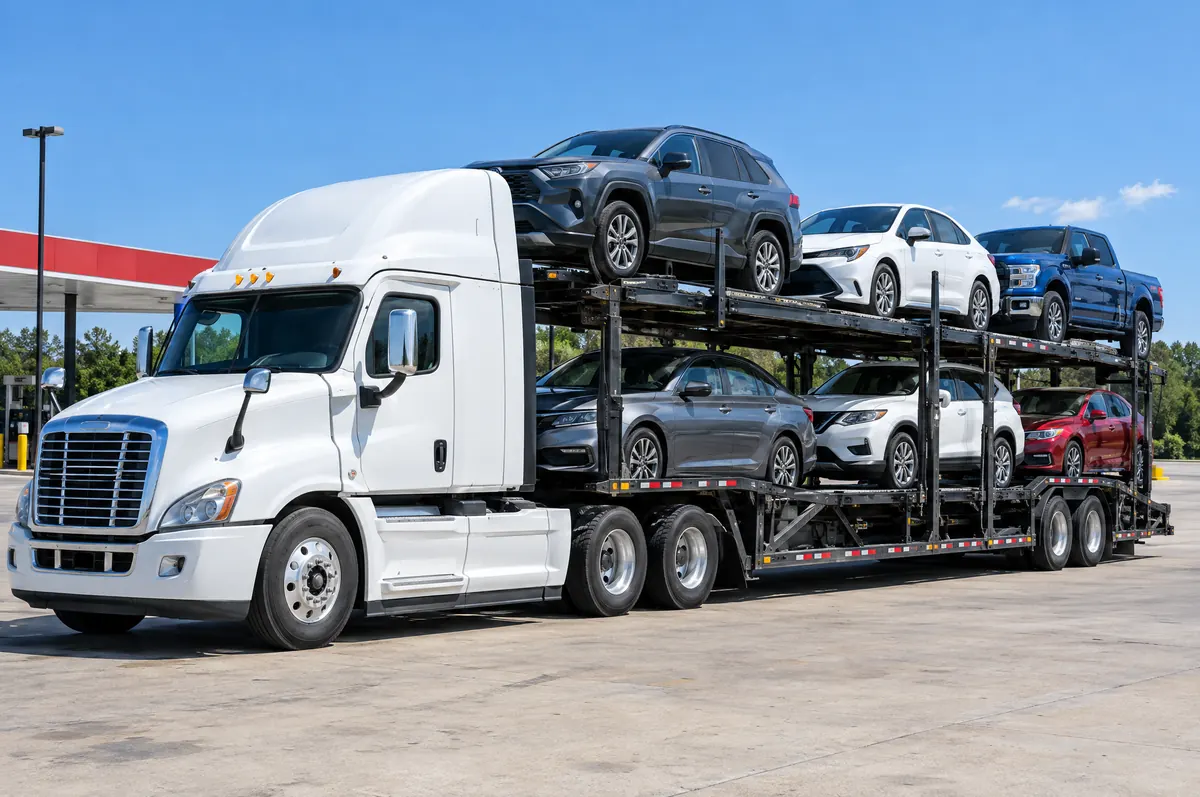
Everything on a car carrier, the truck and every car on both decks, has to fit under the height limit of each state on the route. That ceiling is fixed, so the space above each car is tight. A tall vehicle takes up clearance that would otherwise go to another car.
- Lifted trucks and SUVs usually need a lower-deck position, where there is more room above them.
- Roof racks, cargo boxes, light bars and tall antennas add height. Remove what you can.
- Full-size vans and tall trucks can be too tall for some positions, which limits which trucks can take them.
Long and heavy vehicles
Length and weight count too. Car carriers are allowed extra overhang, which is why the front car on some rigs sits out over the cab, but a long crew-cab truck with a hitch or a rear tire carrier can still limit where it goes.
Weight is shared too. A heavy lifted truck with large wheels and aftermarket bumpers counts against the truck's gross weight limit like everything else on it.
Lowered cars: the ramp is the problem
The difficulty with a lowered car is getting it on and off. The steel ramps on an open carrier are steep, and a car with little ground clearance can scrape its front lip, exhaust or underbody on the way up.
- Tell the company the ground clearance in inches, measured at the lowest point.
- Ask whether the driver carries extension ramps or low-angle ramps.
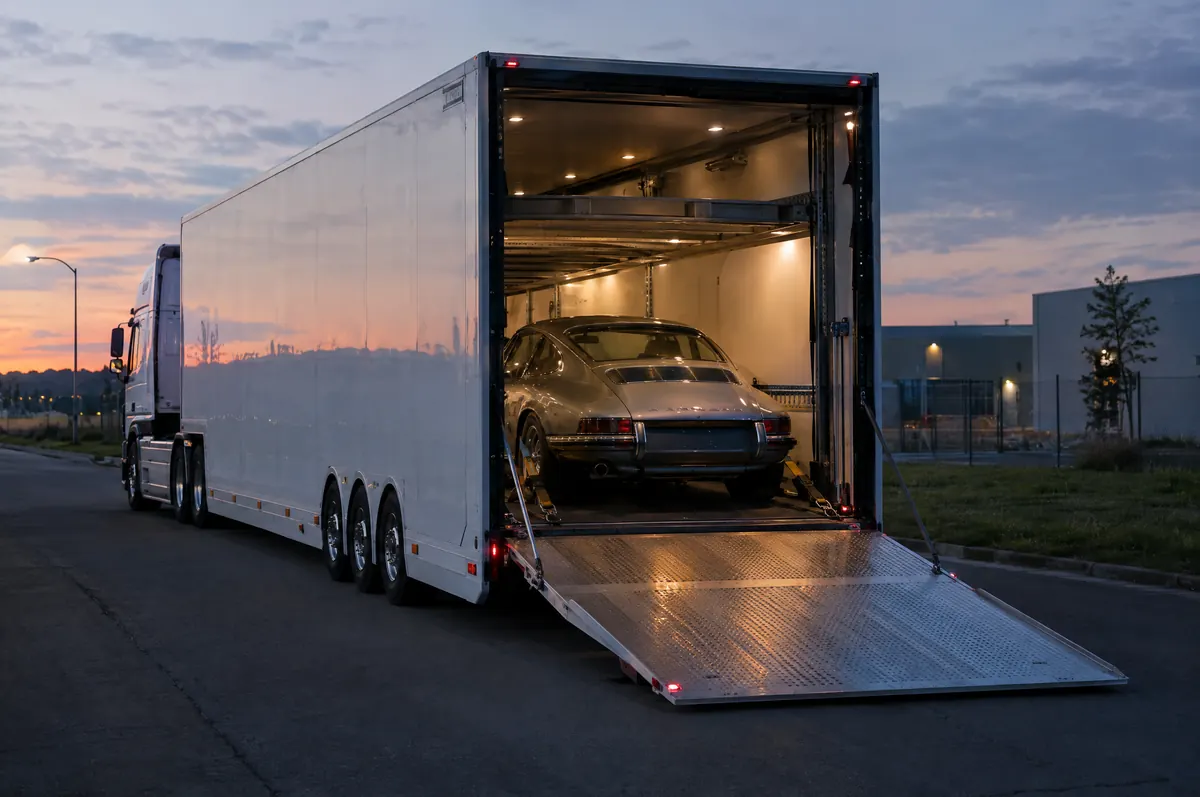
- Consider an enclosed trailer with a hydraulic liftgate, which raises the car level instead of driving it up a ramp.
- Mention front splitters, side skirts and low exhausts specifically. They are what usually scrapes.
What to tell the company when you book
- Give the real heightMeasure to the highest point, including anything on the roof. The factory height is not what the driver will measure.
- List every modificationLift or leveling kit, oversized tires, wider fenders, aftermarket bumpers, a winch, a hitch, a lowered suspension.
- Send photosA side photo tells a dispatcher more than a list. It helps them match your vehicle to a truck with room for it.
- Get the price confirmed for those detailsA quote for a stock vehicle can be re-priced at pickup if the vehicle turns out to be taller or heavier. Ask for the confirmed price in writing.
Getting a modified vehicle ready
- Remove roof racks, cargo boxes and bike racks, or tell the company they are staying on.
- Secure or remove loose aftermarket parts, such as light bars, spare tires on carriers and removable steps.
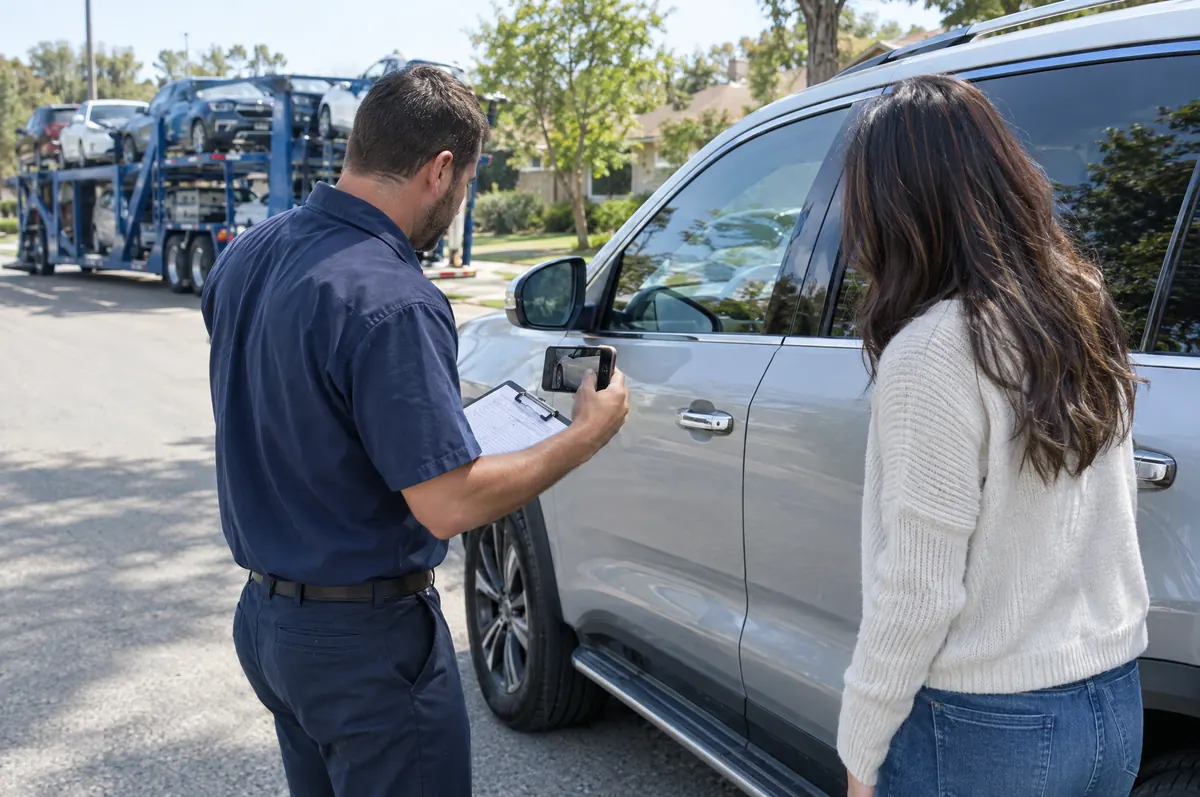
- Photograph the modifications at pickup along with the rest of the car. Aftermarket parts are easy to overlook on an inspection.
- Ask the carrier whether its cargo coverage treats aftermarket parts differently, and what it would pay for them.
Frequently asked questions
Does a lifted truck cost more to ship?
Often, because it takes more clearance and sometimes more weight allowance than a stock truck, which can mean one fewer car on the load. Describe it accurately when you book so the quote reflects it.
Can a lifted truck go on the top deck?
Usually not. The top deck has the least room before the carrier reaches the height limit, so tall vehicles normally go on the lower deck. It depends on the truck and the rest of the load.
Do I have to take my roof rack off?
It is best to. A rack or cargo box adds height and can catch on the deck above. If it has to stay on, tell the company its height when you book.
How do lowered cars get loaded without scraping?
With extension ramps that reduce the angle, or on an enclosed trailer with a hydraulic liftgate. Tell the company the ground clearance so it sends a truck that can load the car.
Enclosed car transportWhat is the height limit for a car carrier?
There is no federal limit. States set their own, between 13.6 and 14.6 feet, and a loaded carrier has to fit under the limit of every state on its route.
Sources
- FHWA, Federal commercial vehicle size and weight standards
- 23 CFR 658.13
- FHWA, Federal commercial vehicle size and weight standards
Written and reviewed by the Haulwide editorial team. Editorial policy