Table of contents
Quick answer
Car shipping prices are driven mostly by distance, vehicle size and weight, open or enclosed transport, season and demand on your route, whether the car runs, and how flexible your pickup dates and location are.
1–2. Distance and route popularity
Longer trips cost more in total, but the price per mile falls as distance grows, because loading, dispatch and paperwork cost about the same on every trip.
Where you ship matters as much as how far. Routes along busy interstates have lots of trucks competing for cars, while rural pickups require a detour that the carrier has to price in. Direction matters too: a route full of people moving in one direction costs more that way than the reverse.
3–4. Vehicle size, weight and modifications
A truck has limited space and a legal weight limit. Larger and heavier vehicles take room that could carry another car, so they cost more.
| Vehicle | Typical effect on price |
|---|---|
| Compact or midsize sedan | Baseline |
| SUV or crossover | About 10–25% more |
| Full-size pickup or van | About 20–35% more |
| Lifted, lowered or oversized | Varies; may need special equipment |
Compact or midsize sedan
- Typical effect on price
- Baseline
SUV or crossover
- Typical effect on price
- About 10–25% more
Full-size pickup or van
- Typical effect on price
- About 20–35% more
Lifted, lowered or oversized
- Typical effect on price
- Varies; may need special equipment
5. Open or enclosed transport
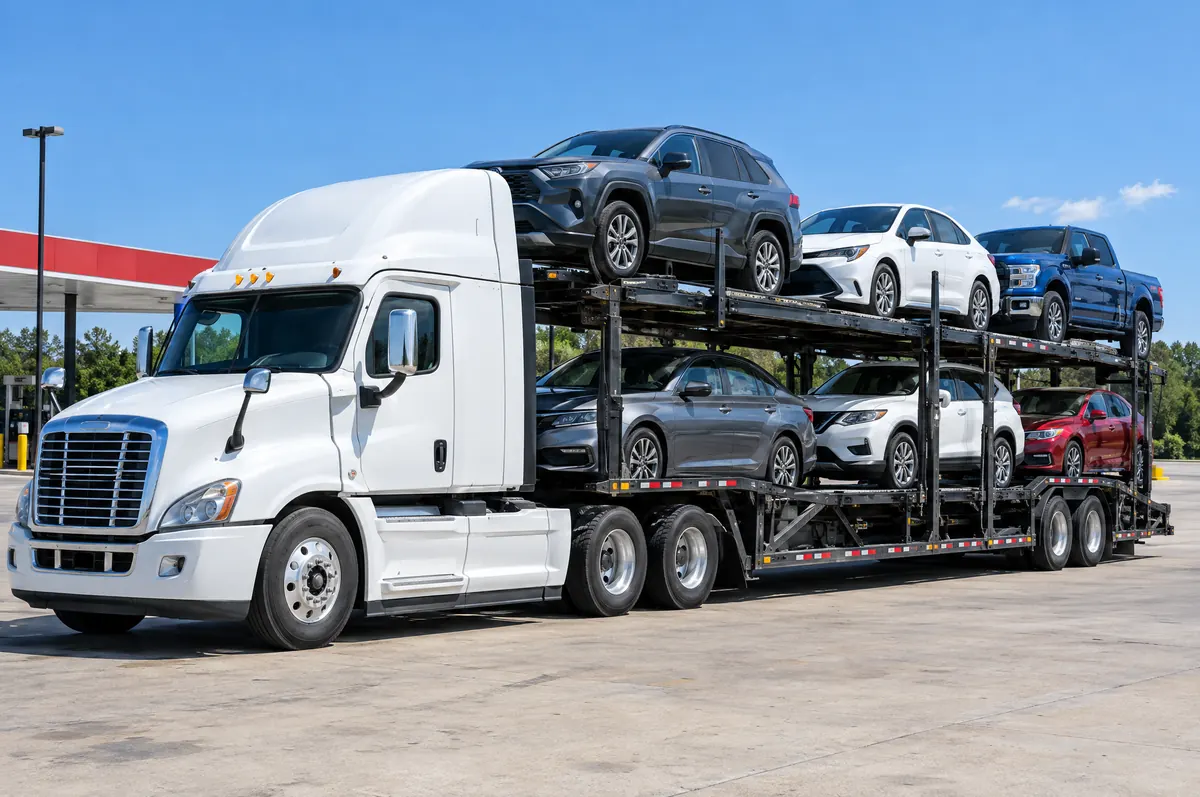
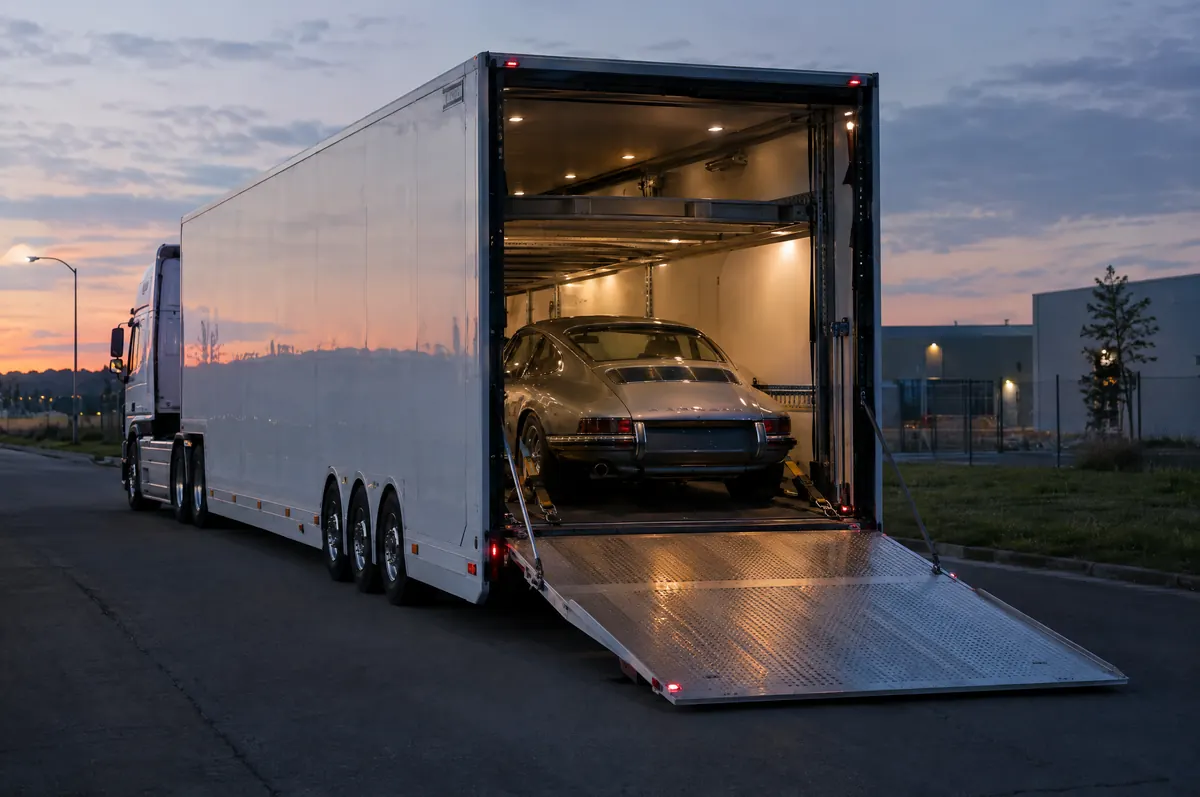
Enclosed trailers carry fewer vehicles and there are fewer of them on the road, so enclosed shipping usually costs 40% to 60% more than open transport for the same route.
6. Season and demand
Summer is the busiest time for household moves, and prices rise with demand. Snowbird season pushes prices up into warm states in the fall and out of them in the spring. January and February are often the cheapest months outside those corridors.
7. Whether the car runs
A car that can't drive onto the trailer needs a winch or other equipment and extra time, so inoperable vehicles usually cost more. Tell the company upfront; a surprise at pickup can mean a missed truck.
8–9. Pickup timing and location
A tight pickup date limits which trucks can take your car. A window of several days lets the carrier fit you into an existing route, which usually lowers the price. Meeting the truck in an open lot near a highway can also help when your street is hard for a big rig to reach.
10. Fuel prices
Diesel is one of a carrier's biggest costs. When fuel prices rise for weeks at a time, quotes tend to follow; short spikes rarely change a booked price.
What you can control
- Choose open transport for an everyday car
- Give a pickup window of three to five days
- Avoid peak summer and holiday weeks when possible
- Meet the truck at an accessible spot
- Ship more than one car together
- Compare several quotes and ask what's included
Frequently asked questions
Can my car shipping price change after I book?
It can with some companies, especially if the quote was an estimate or your details change. Ask whether the price is guaranteed once a carrier accepts, and get it in writing.
Is insurance an extra cost?
Carrier insurance should be included in the price. Be wary of companies selling basic coverage as an add-on.
Car shipping insuranceIs it cheaper to ship two cars at once?
Usually per car, yes, because pickup and dispatch costs are shared.
Multi-car shipping
Sources
Written and reviewed by the Haulwide editorial team. Editorial policy