
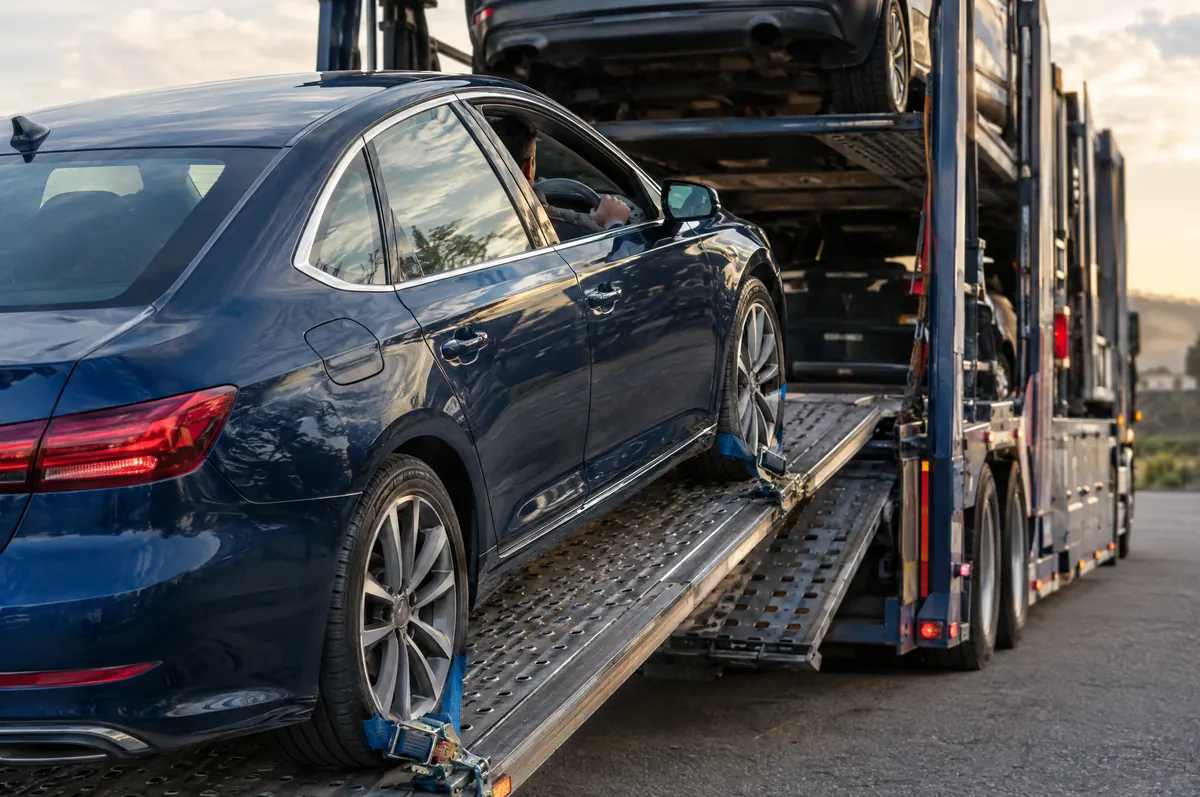
Car shipping service
State-to-State Car Shipping
- Estimates clearly labeled
- Independent company rankings
- Free to compare
$0.70–$1.89 per mile
Average cost per mile
Published figures, about 1,250 miles
$875 – $2,365
Typical total cost
Standard car, about 1,250 miles
3–5 days
Transit time
Depends on distance
Relocations
Best for
Free · No obligation · About a minute
Get a state-to-state car shipping quote

What is state-to-state car shipping?
You book pickup in one state and delivery in another. The carrier needs a USDOT number and FMCSA operating authority to haul cars across state lines for hire, and brokers need their own broker authority and a $75,000 bond.
- Short regional trips and long cross-country moves
- Carriers with FMCSA interstate operating authority
- Door-to-door pickup and delivery
- Open and enclosed transport
- Registration and insurance to update after you move

Is state-to-state car shipping right for you?
- You're relocating to another state
- You bought a car from a dealer or seller out of state
- You're sending a car to a family member in another state
- A student is taking a car to an out-of-state school
- You're moving for a job or military assignment

State-to-State Car Shipping pricing
Price per mile by distance, from published industry studies.
| Distance | Sedan | SUV |
|---|---|---|
| Under 500 miles | $0.80–$2.20 per mile | $0.85–$2.35 per mile |
| 500–999 miles | $0.73–$1.89 per mile | $0.78–$2.02 per mile |
| 1,000–1,499 miles | $0.70–$1.89 per mile | $0.75–$2.02 per mile |
| 1,500–1,999 miles | $0.40–$1.89 per mile | $0.43–$2.02 per mile |
| 2,000+ miles | $0.35–$1.89 per mile | $0.37–$2.02 per mile |

Prices move with the season
No source publishes monthly prices for this service, so this is what the studies say about timing.
Summer moving season and the holidays tighten truck space, while mid-January to February is usually the quietest stretch of the year.
Direct Connect Auto Transport reports 2026 versus 2025 running 3% to 8% higher.
What affects the price
How it works
- Enter both statesAdd your pickup and delivery addresses, your vehicle and your pickup window.
- Compare companiesCompare prices, transit times, reviews and interstate licensing.
- Book and confirm termsGet the price, pickup window, deposit and cancellation terms in writing.
- Carrier assignedIf you booked through a broker, it assigns a licensed interstate carrier and shares the details.

Pros and cons
- Pro: Door-to-door service between any two states
- Pro: Lower price per mile as distance grows
- Pro: Carriers licensed and insured at the federal level
- Pro: Saves long drives, hotel nights and wear
- Con: Longer routes take several days
- Con: Remote or one-way routes can cost more
- Con: Summer and snowbird seasons raise prices
- Con: You'll need to register the car in your new state

Vehicles it suits
- Sedans and compact carsGood fit
- SUVs and crossoversGood fit
- Pickup trucksGood fit
- Electric vehiclesGood fit
- Vans and minivansGood fit
- Luxury carsEither
- Classic carsConsider alternative
- Non-running vehiclesEither
State-to-State vs. In-State Car Shipping
- Typical distance
- 200 to 3,000+ miles
- Under about 500 miles
- Price per mile
- Lower on longer trips
- Higher, because fixed costs dominate
- Transit time
- 1–12 days
- Often 1–2 days
- Carrier licensing
- USDOT number and FMCSA authority
- State rules apply; many still have a USDOT number
- Truck type
- Multi-car long-haul carriers
- Often smaller wedge or flatbed trucks
Columns: State-to-state · In-state
Full comparisonCompanies that list state-to-state car shipping
Researched companies ordered by Trustpilot rating, adjusted for review count.
Related services
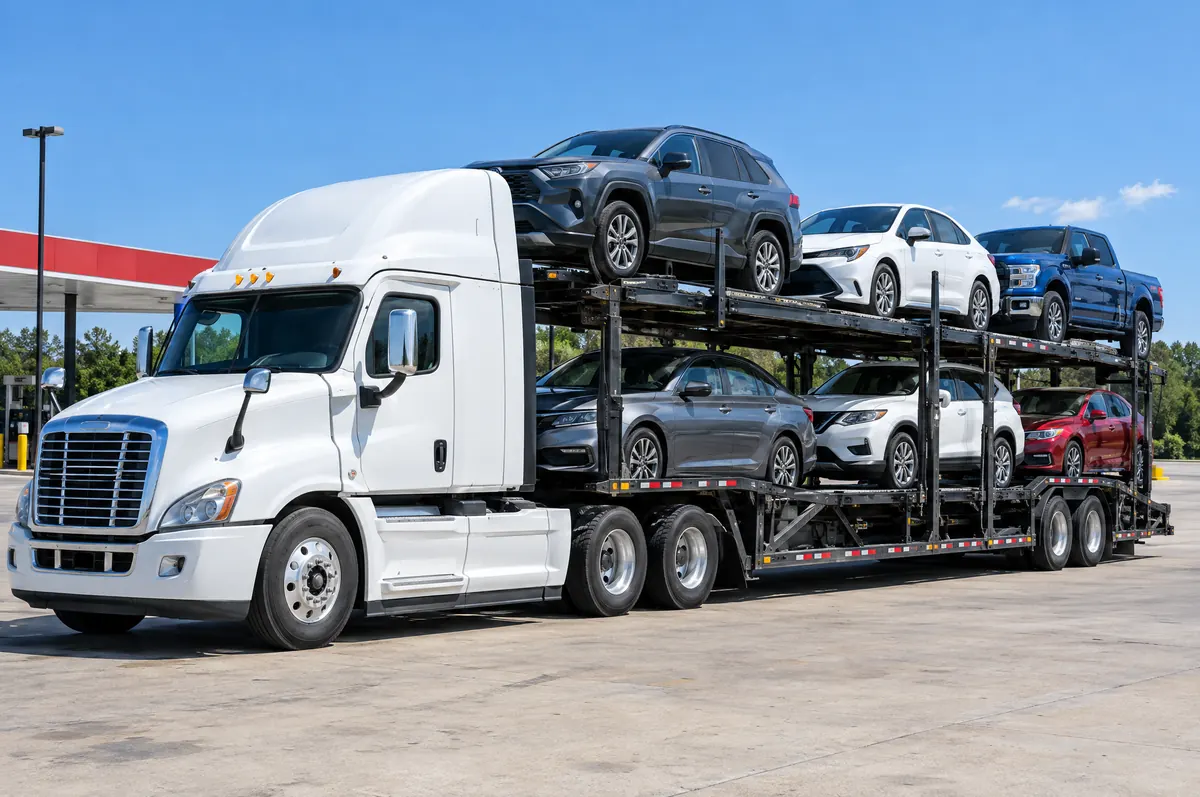
- Open Car TransportThe most common and affordable way to ship a car, on a multi-car carrier open to the air (also called open-air transport).
- Enclosed Car TransportA covered trailer that shields the car from weather, road debris and view.
- Door-to-Door Car ShippingThe driver picks up and delivers as close to your addresses as a large truck can safely reach.
- Expedited Car ShippingPriority dispatch that shortens the wait for pickup when you have a firm deadline.
- Inoperable Car ShippingTransport for cars that don't start, steer or brake, loaded with a winch or forklift.


Insurance and safety
Carriers must carry liability insurance
Most for-hire interstate carriers must file at least $750,000 in liability coverage with the FMCSA. Cargo coverage for the cars on the truck is set by the carrier, so ask for the certificate.
Source: 49 CFR 387.9Authority can be checked for free
Any broker or carrier's USDOT number, operating status and insurance on file can be looked up in the FMCSA database.
Source: FMCSA company snapshotThe Bill of Lading is signed twice
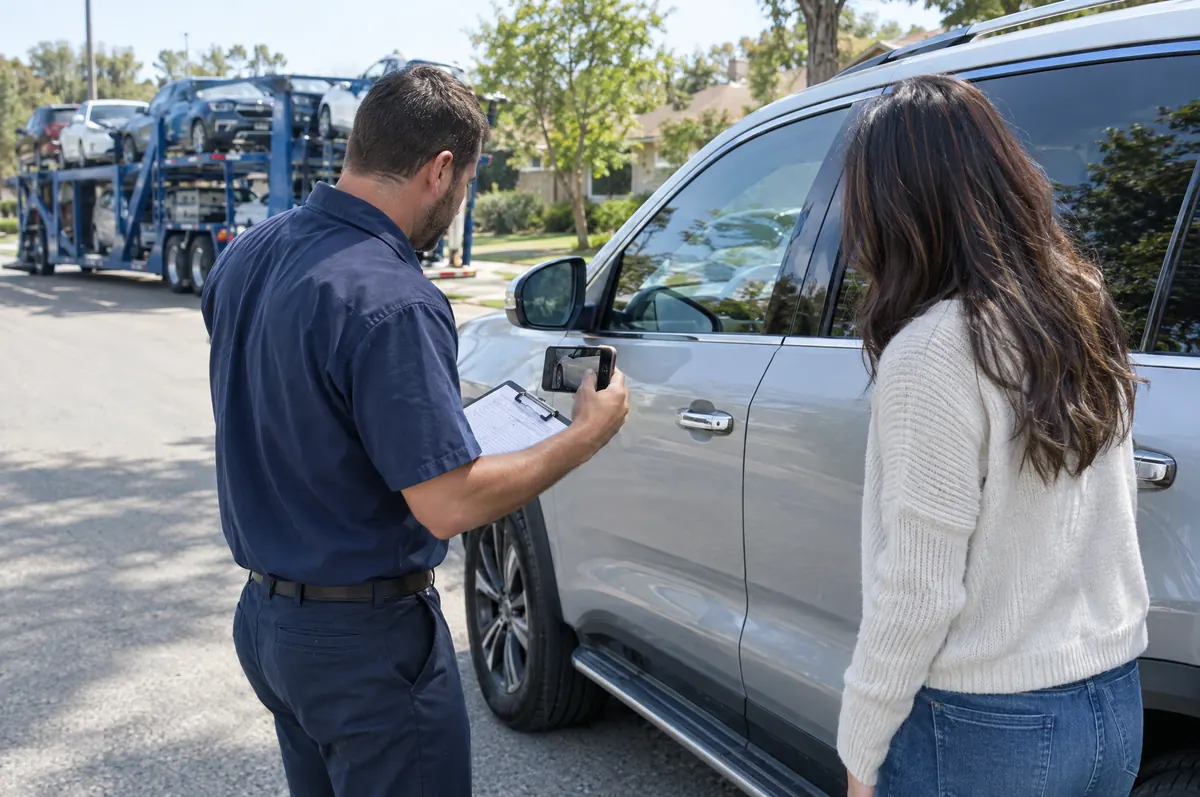
You and the driver inspect the car at pickup and again at delivery. Note any new damage on the Bill of Lading before you sign, and photograph it before the driver leaves.
Source: FMCSA: Protect your move

Frequently asked questions
What is state-to-state car shipping?
Any car shipment that crosses a state line, whether it's a short regional trip or a move across the country.
What license does an interstate car shipping company need?
Carriers need a USDOT number and FMCSA operating authority to haul vehicles across state lines for hire. You can look both up for free.
Verify a companyShould I use a broker or a carrier?
Either can work. Brokers need FMCSA broker authority and a $75,000 bond and arrange a carrier for you; carriers own the trucks.
Broker vs. carrier
How much does it cost to ship a car to another state?
Published studies put a standard car on an open truck at about $365–$945 for 500 miles and $740–$3,780 for 2,000 miles.
Car shipping cost calculatorWhy do short interstate trips cost more per mile?
Loading, paperwork and dispatch cost about the same on any trip, so they make up a bigger share of a short trip's price.
Car shipping cost per mileHow long does state-to-state shipping take?
About 1–2 days for neighboring states and 6–12 days across the country, plus the pickup window.
How long car shipping takes
Where these figures come from
Published industry studies, not Haulwide shipments. Checked Sep 16, 2026.
- SGT Auto Transport(opens in a new tab)
Published Sep 9, 2026. 30 months of the company's own shipping data (January 2024 to June 2026) across all 50 states and 1,581 state-to-state lanes, limited to completed single-vehicle open transport deliveries and mix-adjusted for distance.
- Move.org(opens in a new tab)
Published Mar 4, 2026. Nearly 800 broker quotes analyzed, priced for a running 2025 Toyota Camry with a one-week lead time using October 2025 quotes.
- Kelley Blue Book(opens in a new tab)
Published Jan 12, 2026. Quotes requested from eight transport companies for a 2025 Honda Accord on three routes from Orlando, on standard open carriers.
- Direct Connect Auto Transport(opens in a new tab)
No publication date given. The company's own carrier data for an operable sedan on open transport; the page states no publication date.
- RoadRunner Auto Transport(opens in a new tab)
Published Sep 1, 2026. The company's completed shipment history, which it describes as over 1 million vehicles delivered across 30+ years, updated September 2026. Its nationwide average is $1,215 at a median distance of 987 miles and a median $1.23 per mile.
The sources disagree, so figures are shown as the span across them rather than a single price. Pricing methodology
Ready to ship your car with state-to-state car shipping?
Enter your route to compare estimated prices, pickup dates and transport companies.