
Oregon car shipping
Car Shipping in Oregon
- Estimates clearly labeled
- Independent company rankings
- Free to compare
$0.35–$1.89 per mile
Open transport rate
1–4 days
Avg. transit time
$240 – $660
Within Oregon
$0.45–$3.02 per mile
Enclosed transport rate
Free · No obligation · About a minute
Get a Oregon car shipping quote

Oregon shipping rates
Published figures for a standard car, by estimated distance.
- Open transport
- $0.35–$1.89 per mile
- Enclosed transport
- $0.45–$3.02 per mile
- Within Oregon
- $240 – $660
- Oregon to California
- $410 – $1,060
- Oregon to Washington
- $240 – $660
- Oregon to Texas
- $690 – $3,270

Prices move with the season
No source publishes monthly prices by state, so this is what the studies say about timing.
Summer moving season and the holidays tighten truck space, while mid-January to February is usually the quietest stretch of the year.
Direct Connect Auto Transport reports 2026 versus 2025 running 3% to 8% higher.
Published price adjustments
- Pickup truckPickups cost about 38% more to ship than standard cars.Source: Move.org
- SUVAt 500 miles, an SUV averaged $743 against $696 for a car.Source: Move.org
- Non-running vehicleAdd $150 to $300 for a vehicle that does not run.Source: Direct Connect Auto Transport
Why ship your car in Oregon?
Oregon changes a car's economics the day it lands: the state levies no general sales tax, so a used vehicle shipped in and titled here owes neither a sales tax nor a use tax, and only a near-new car bought from a dealer meets any vehicle tax at all. The routes in and out are the harder part, because I-5 climbs Siskiyou Summit, the highest point on the whole interstate, and I-84 threads a river gorge that shuts for ice and wind. And until a 2023 law, this was one of just two states that would not let a driver pump their own gas.
- Siskiyou Summit on I-5, at 4,310 feet, is the highest point on the entire interstate and chains up or closes in winter storms
- I-84 through the Columbia River Gorge closes in both directions for ice storms and high east winds
- No general sales tax, so a used car shipped in owes no sales or use tax; the 0.5% vehicle use tax reaches only near-new cars bought from a dealer
- DEQ emissions testing is required to register only in the Portland and Medford metro areas, and only once every two years
- Since a 2023 law drivers may fuel their own cars, but no more than half of a station's pumps may be self-service
Flexible pickup dates and a nearby meeting point usually get you a lower price.

Good to know in Oregon
The things that actually move a pickup date here.
The state only stopped pumping your gas for you in 2023
For decades Oregon stood with New Jersey as one of just two states that barred drivers from fueling their own cars. House Bill 2426 ended that in 2023, and ORS 480.332 now lets a customer dispense gasoline themselves, but it forbids a station from assigning more pumps to self-service than it keeps staffed for attended service, and at least one attendant has to be on duty whenever the self-serve pumps are open. So a car delivered here meets a split arrangement, self-serve at some pumps and an attendant at the rest, and with Oregon out, New Jersey is now the last state holding a full ban.
Registering a used car here owes no sales tax
Oregon is one of the few states with no general sales tax, so a used vehicle shipped in and titled here is charged neither a sales tax nor a use tax on its value. The only vehicle tax the state keeps is the privilege and use tax that began in 2018 at one-half of one percent, and it reaches a car only when it was bought from a dealer, reads 7,500 miles or less, and has never been titled in Oregon, which describes a near-new car rather than the typical used one that arrives on a carrier. For most shipped-in vehicles the registration is the title paperwork and the plate fee, and nothing at all on the value of the car.
Two winter chokepoints: the highest pass on I-5 and an ice-bound gorge
I-5 enters Oregon over Siskiyou Summit, which at 4,310 feet, about twelve miles south of Ashland near the California line, is the highest point on the interstate's entire run from Canada to Mexico. ODOT runs conditional closures there, its own stated example reading "chains required on all vehicles excluding four wheel drive vehicles unless towing," and state law makes a driver carry chains or traction tires whenever a Snow Zone sign says to, dry road or not, with a class C traffic violation for ignoring it. The other way in, I-84 east out of Portland, threads the Columbia River Gorge, where freezing rain and high east winds shut the freeway both ways: ODOT closed it from Troutdale to Hood River for more than a day in the January 2024 ice storm. A carrier crossing either one in winter is working to a window, not an hour.
Portland and Medford are the only two places a car is tested
Oregon checks vehicle emissions in just two corners of the state: the Portland metropolitan area and the Medford area in the Rogue Valley. DEQ tests a non-exempt passenger car there once every two years, and the test is tied to the plate, since you bring the DMV renewal form to the station, so a car garaged inside either boundary is pulled into the program while one registered anywhere else in Oregon is not. Where the vehicle will live, rather than where it came from, decides whether a DEQ test belongs on the arrival list. The boundaries follow federal clean-air lines instead of county lines, so DEQ keeps an online lookup for checking a specific address.
Sources: Oregon Revised Statutes 480.332: self-service dispensing of Class 1 flammable liquids, OPB: Oregon ends its ban on self-serve gas, 2023, Oregon Department of Revenue: vehicle privilege and use taxes, Oregon DEQ: Vehicle Inspection Program, Portland and Medford testing, ODOT: Snow Zone signs, chain and traction-tire requirements, ODOT TripCheck: Oregon chain law and Siskiyou Pass conditional closures, Siskiyou Summit: the highest point on Interstate 5, KGW: I-84 closed through the Columbia River Gorge in the January 2024 ice storm

Popular routes from Oregon

Popular routes to Oregon
Major cities in Oregon
Starting prices on popular routes.

Shipping services in Oregon
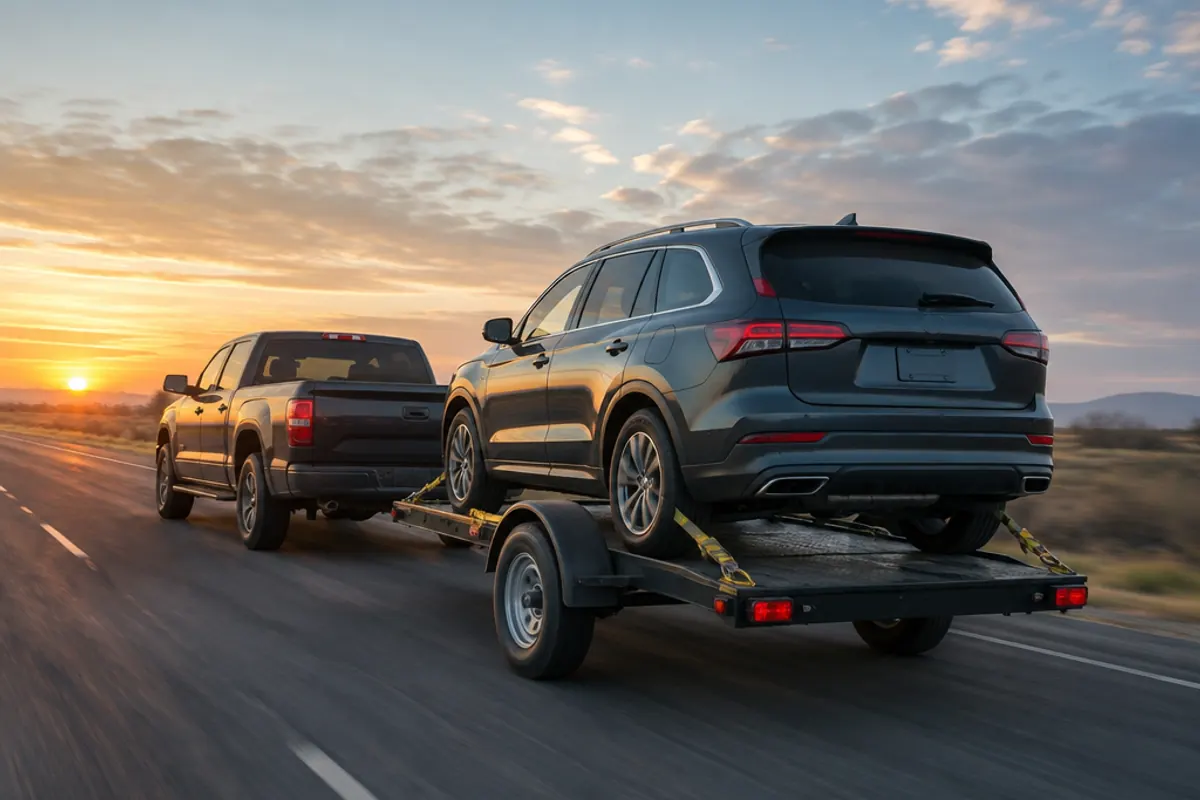

Car shipping companies serving Oregon
Researched companies ordered by Trustpilot rating, adjusted for review count. Not ranked by state data.
Frequently asked questions
Is it safe to ship a car to or from Oregon?
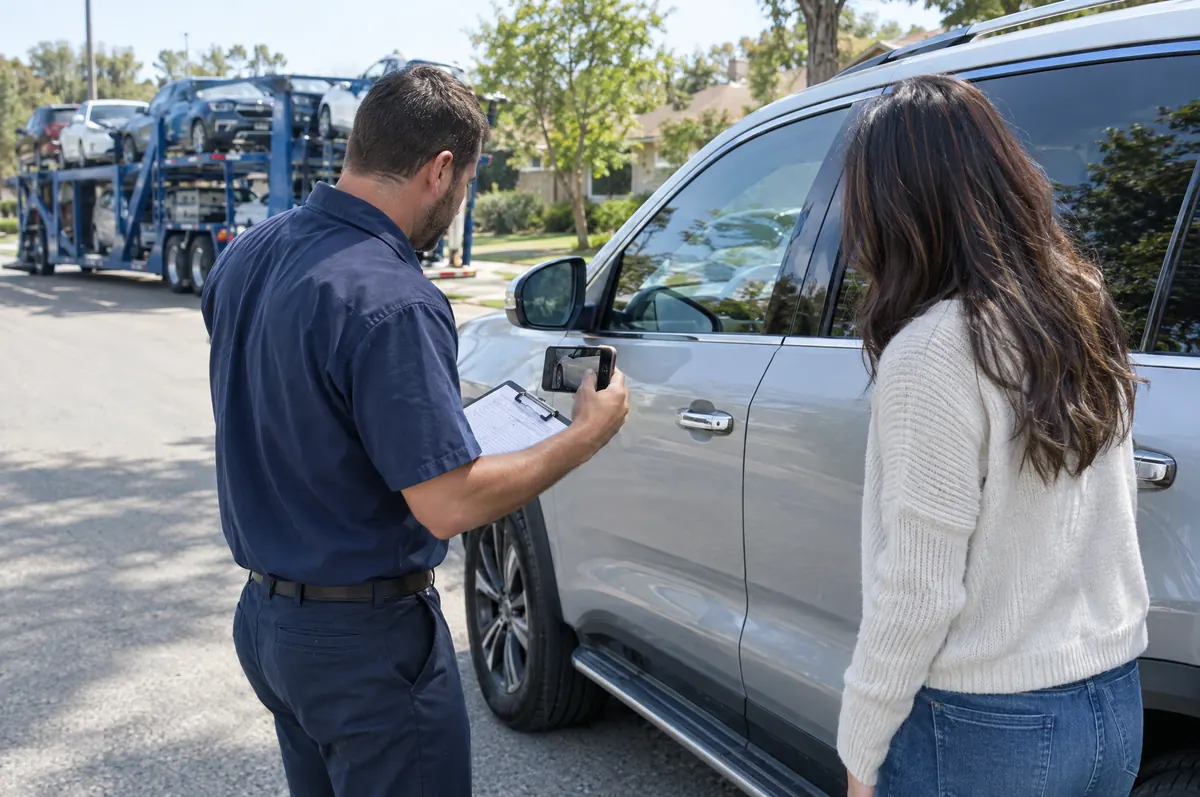
Car shipping is routine when you use a licensed, insured company. Check the company's USDOT or MC number, confirm its insurance, and record your car's condition at pickup.
How to ship a carHow do I choose a trustworthy car shipping company in Oregon?
Look up the company's USDOT or MC number, compare several quotes, read recent reviews, and avoid companies that ask for a large deposit before a carrier is assigned.
Avoid car shipping scamsShould I choose open or enclosed transport in Oregon?
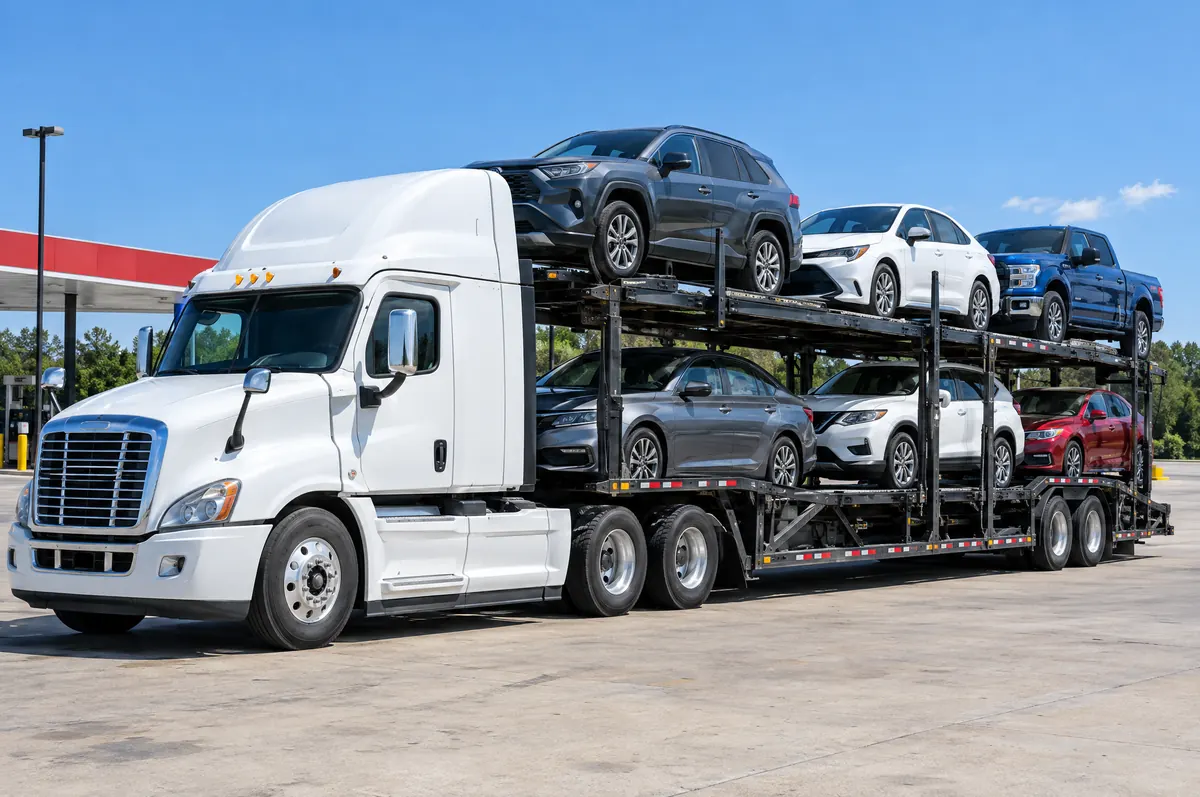
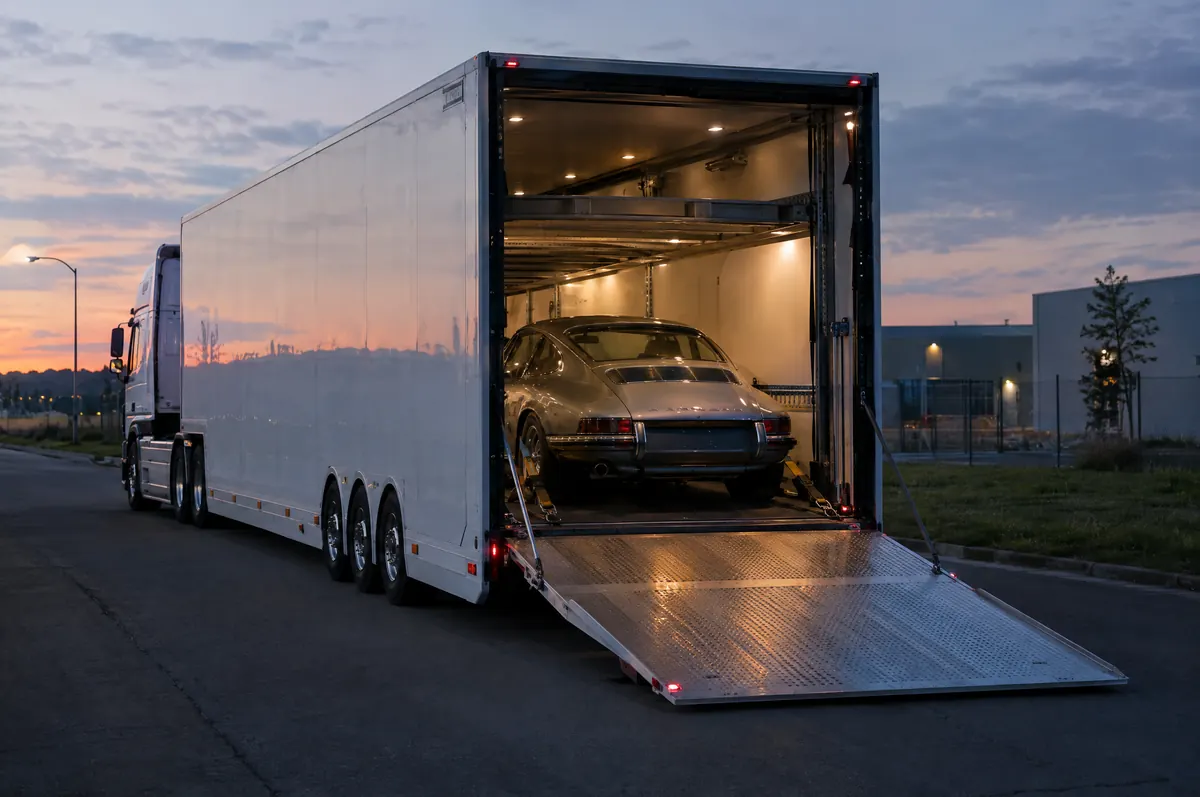
Open transport suits most cars and is the cheapest option. Enclosed transport is worth considering for luxury, classic or exotic cars, or when the car will travel through harsh weather.
Open vs. enclosed shipping
How much does it cost to ship a car from Oregon?
Published figures put open transport from Oregon at about $240 – $660 to Washington and $985 – $5,330 to Florida. Enclosed transport runs 30–60% higher in the same studies. Distance, vehicle size, season and pickup location change the price.
Car shipping cost guideHow much does car shipping cost per mile in Oregon?
Published figures for longer Oregon routes run about $0.35–$1.89 per mile for open transport and $0.45–$3.02 per mile for enclosed. Short trips cost more per mile than long ones.
Car shipping cost per mileHow much does it cost to ship a car within Oregon?
Published figures put an in-state move of about 120 miles, such as Portland to Eugene, at $240 – $660 on an open carrier.
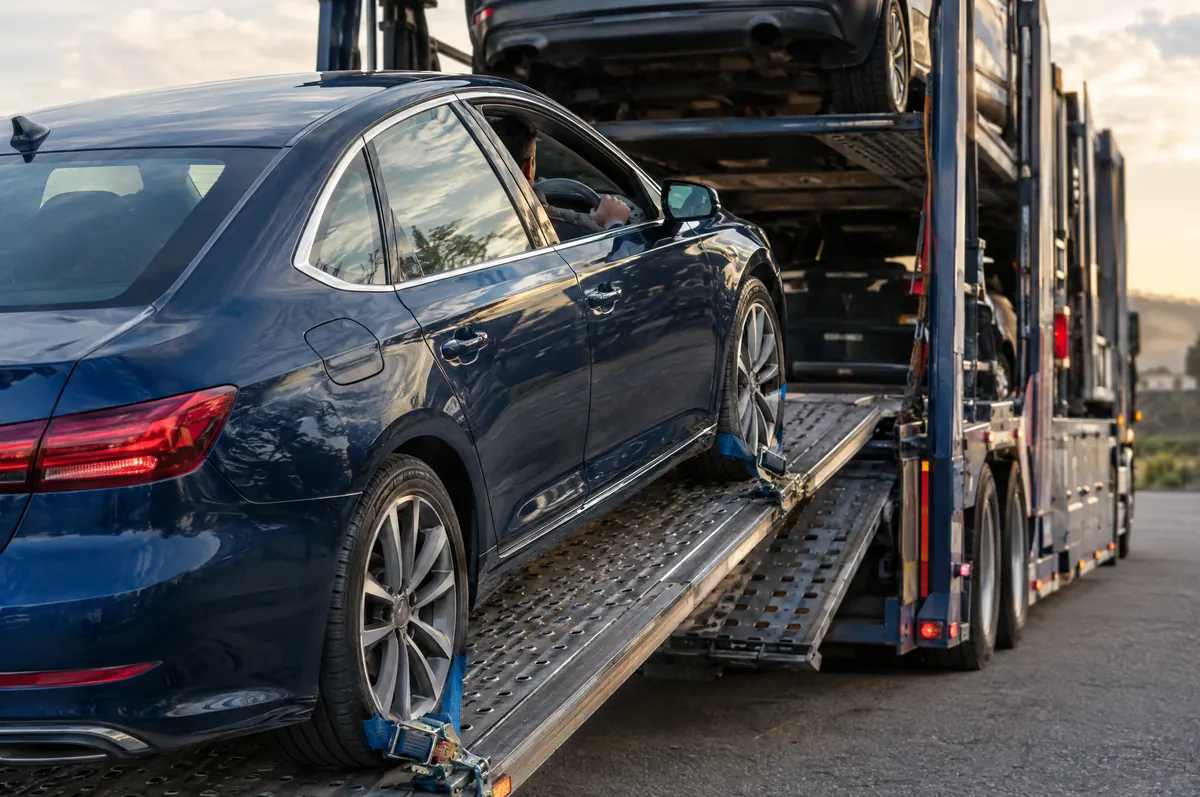
Oregon car shipping guide
Everything to know about shipping a car to or from Oregon: costs, routes, preparation and what to expect.
- How prices are set and how to compare quotes
- Choosing open or enclosed transport
- Getting your car ready for pickup
Where these figures come from
Published industry studies, not Haulwide shipments. Checked Sep 16, 2026.
- SGT Auto Transport(opens in a new tab)
Published Sep 9, 2026. 30 months of the company's own shipping data (January 2024 to June 2026) across all 50 states and 1,581 state-to-state lanes, limited to completed single-vehicle open transport deliveries and mix-adjusted for distance.
- Move.org(opens in a new tab)
Published Mar 4, 2026. Nearly 800 broker quotes analyzed, priced for a running 2025 Toyota Camry with a one-week lead time using October 2025 quotes.
- Kelley Blue Book(opens in a new tab)
Published Jan 12, 2026. Quotes requested from eight transport companies for a 2025 Honda Accord on three routes from Orlando, on standard open carriers.
- Direct Connect Auto Transport(opens in a new tab)
No publication date given. The company's own carrier data for an operable sedan on open transport; the page states no publication date.
- RoadRunner Auto Transport(opens in a new tab)
Published Sep 1, 2026. The company's completed shipment history, which it describes as over 1 million vehicles delivered across 30+ years, updated September 2026. Its nationwide average is $1,215 at a median distance of 987 miles and a median $1.23 per mile.
The sources disagree, so figures are shown as the span across them rather than a single price. Pricing methodology
Ready to ship your car to or from Oregon?
Enter your route to compare estimated prices, pickup dates and transport companies.