
Utah car shipping
Car Shipping in Utah
- Estimates clearly labeled
- Independent company rankings
- Free to compare
$0.37–$1.89 per mile
Open transport rate
1–3 days
Avg. transit time
$240 – $660
Within Utah
$0.48–$3.02 per mile
Enclosed transport rate
Free · No obligation · About a minute
Get a Utah car shipping quote

Utah shipping rates
Published figures for a standard car, by estimated distance.
- Open transport
- $0.37–$1.89 per mile
- Enclosed transport
- $0.48–$3.02 per mile
- Within Utah
- $240 – $660
- Utah to California
- $395 – $1,020
- Utah to Nevada
- $250 – $680
- Utah to Texas
- $740 – $2,005

Winter weather affects pickup, not just price
No source publishes monthly prices by state, so this is what the studies say about timing.
Storms and mountain passes can delay a truck that is already on the road, so a wider pickup window matters more here than a slightly lower quote.
Published price adjustments
- Pickup truckPickups cost about 38% more to ship than standard cars.Source: Move.org
- SUVAt 500 miles, an SUV averaged $743 against $696 for a car.Source: Move.org
- Non-running vehicleAdd $150 to $300 for a vehicle that does not run.Source: Direct Connect Auto Transport
Why ship your car in Utah?
Utah is a state where the route decides the job long before the paperwork does. Interstate 70 crosses the empty center of the state through the San Rafael Swell on the longest run of interstate anywhere in the country with no fuel, food or lodging, while the canyon road up to Alta above Salt Lake City is closed outright and the slopes above it fired on with artillery when the snow stacks up. The arrival list is the light part: a shipped-in car needs an emissions test only if it comes to rest in one of the five Wasatch Front counties, and nowhere else in Utah.
- I-70 runs about 105 miles across central Utah from Salina to Green River with no fuel, food or lodging — the longest stretch of interstate in the country with no services
- SR-210 up Little Cottonwood Canyon has 64 avalanche slide paths, with more than half the road under threat from them
- When the canyon beacons flash, UDOT's traction law requires at least 5/32-inch tread and four-wheel drive, snow tires or chains to pass
- Emissions testing is required to register a car only in the five Wasatch Front counties — Salt Lake, Davis, Weber, Utah and Cache
- NOAA counts 25 billion-dollar disasters in Utah since 1980: 12 droughts and 10 wildfires, and not one winter storm
Flexible pickup dates and a nearby meeting point usually get you a lower price.

Good to know in Utah
The things that actually move a pickup date here.
The longest run of interstate in the country with nothing on it
Interstate 70 is the only through route across the middle of Utah, and west of Green River it climbs into the San Rafael Swell — in the Federal Highway Administration's description a large geologic uplift of rugged, scenic terrain in a near-desert climate, and one of the few interstates cut on an entirely new route rather than laid over an existing road. The run from Salina to Green River is about 105 miles with no fuel, no food and no lodging of any kind, long documented as the longest stretch on the whole Interstate system with no services directly along the road, and it is signed that way at the on-ramps. For a carrier it is a planning fact rather than a hazard: the driver fuels and eats before the on-ramp because there is no second chance for a hundred miles, and a breakdown out in the Swell means a long wait for help.
A canyon road the state closes and fires on
State Route 210 climbs Little Cottonwood Canyon from the Salt Lake valley to the ski areas at Alta and Snowbird, and UDOT counts 64 avalanche slide paths in that single canyon, with more than half of SR-210 exposed to them — among the most avalanche-threatened roads in North America. When the snow loads up, the agency closes the road to everyone and brings the slides down on purpose, with artillery and remote-fired charges, before letting traffic back on. Short of a closure a strict traction law governs the canyon: once the beacons at the mouth are flashing, every vehicle needs at least 5/32-inch tread, with four-wheel drive on mud-and-snow tires or two-wheel drive on three-peak-snowflake tires, and chains accepted in place of either. A winter delivery to a house up either Cottonwood canyon waits on the gate, not on the driver.
Emissions testing covers five counties and stops there
Utah runs its vehicle emissions test county by county, and only the five that make up the Wasatch Front operate one — Salt Lake, Davis, Weber, Utah and Cache — the chain of valleys along I-15 where winter inversions trap exhaust against the mountains. A car kept in any of the state's other twenty-four counties has no emissions test to clear at all. Where it does apply, a vehicle arriving from out of state has to pass before its first set of Utah plates is issued, so a household shipping into Salt Lake City or Ogden picks up an errand that one shipping into Moab or St. George never meets. The garage address settles it, which is why it is worth knowing before the booking rather than at the county counter.
The cities line up on I-15, and wildfire costs more days than snow
Ogden, Salt Lake City and Provo sit in a row on Interstate 15, with St. George 300 miles south on the same road, so carriers run I-15 all day and a pickup on the Wasatch Front is easy to schedule. The weather is the surprise. For a state that sells itself on snow, NOAA's billion-dollar disaster record for Utah runs to 25 events since 1980, of which 12 were droughts and 10 were wildfires; the handful left is one severe storm, one flood and one freeze, with not a single winter storm on the list. Drought does nothing to a single load, but a wildfire shuts a given highway with little warning and pushes a carrier onto a long detour. The deep-snow danger is real and concentrated in the mountain canyons rather than spread across the valleys, which is why Utah's snow reaches a shipment as a shut canyon road rather than a statewide delay.
Sources: Federal Highway Administration: I-70, the San Rafael Swell and Cove Fort, Interstate 70 in Utah: the Salina to Green River no-services stretch, UDOT Cottonwood Canyons: avalanche information and SR-210 slide paths, UDOT Cottonwood Canyons: traction law requirements, Utah DMV: vehicle inspections and the counties that require emissions testing, Salt Lake County Health: vehicle emissions testing program, NOAA NCEI: billion-dollar disasters, Utah summary

Popular routes from Utah

Popular routes to Utah
Major cities in Utah
Starting prices on popular routes.

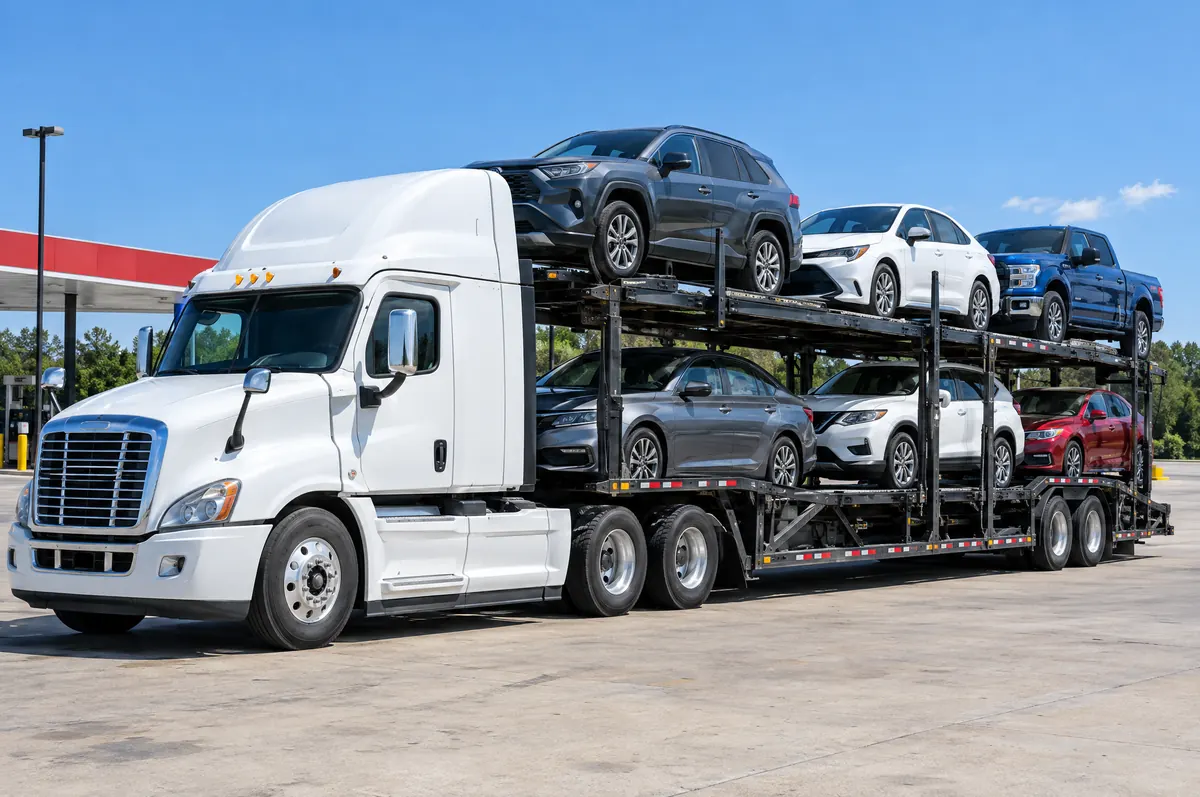
Shipping services in Utah

Car shipping companies serving Utah
Researched companies ordered by Trustpilot rating, adjusted for review count. Not ranked by state data.
Frequently asked questions
Is it safe to ship a car to or from Utah?
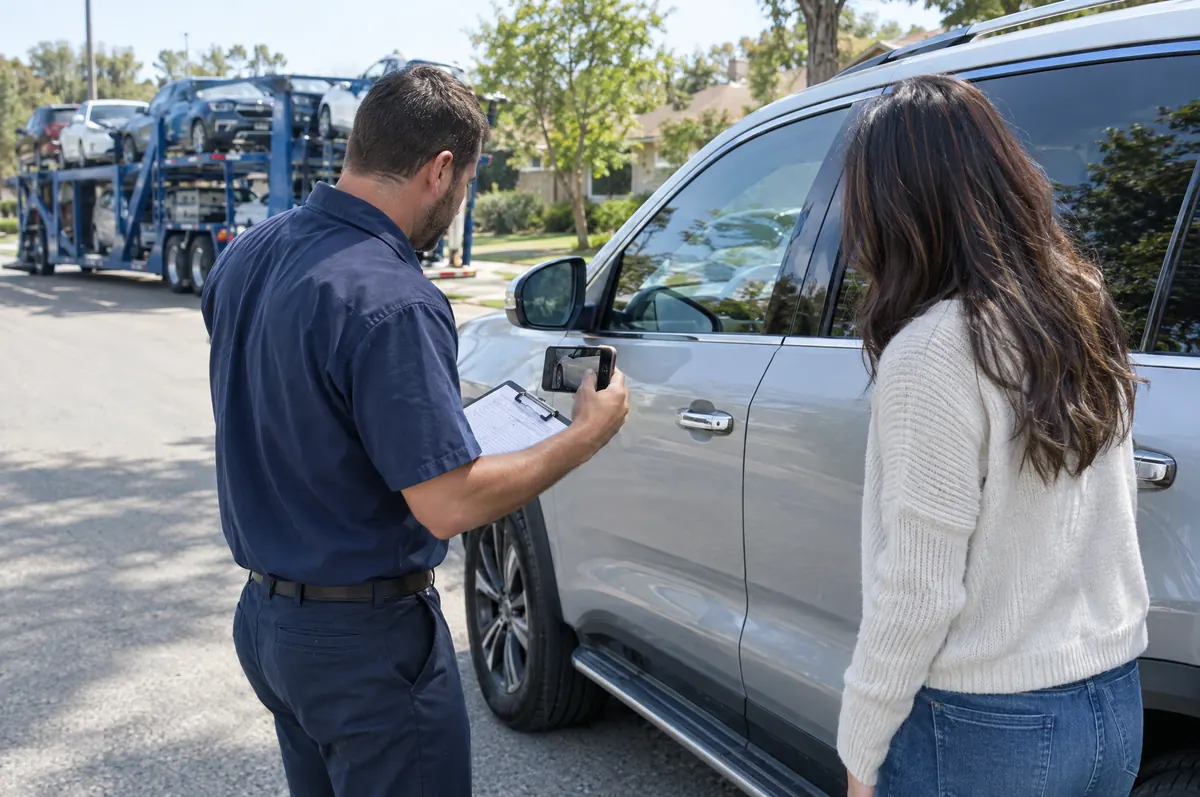
Car shipping is routine when you use a licensed, insured company. Check the company's USDOT or MC number, confirm its insurance, and record your car's condition at pickup.
How to ship a carHow do I choose a trustworthy car shipping company in Utah?
Look up the company's USDOT or MC number, compare several quotes, read recent reviews, and avoid companies that ask for a large deposit before a carrier is assigned.
Avoid car shipping scamsShould I choose open or enclosed transport in Utah?
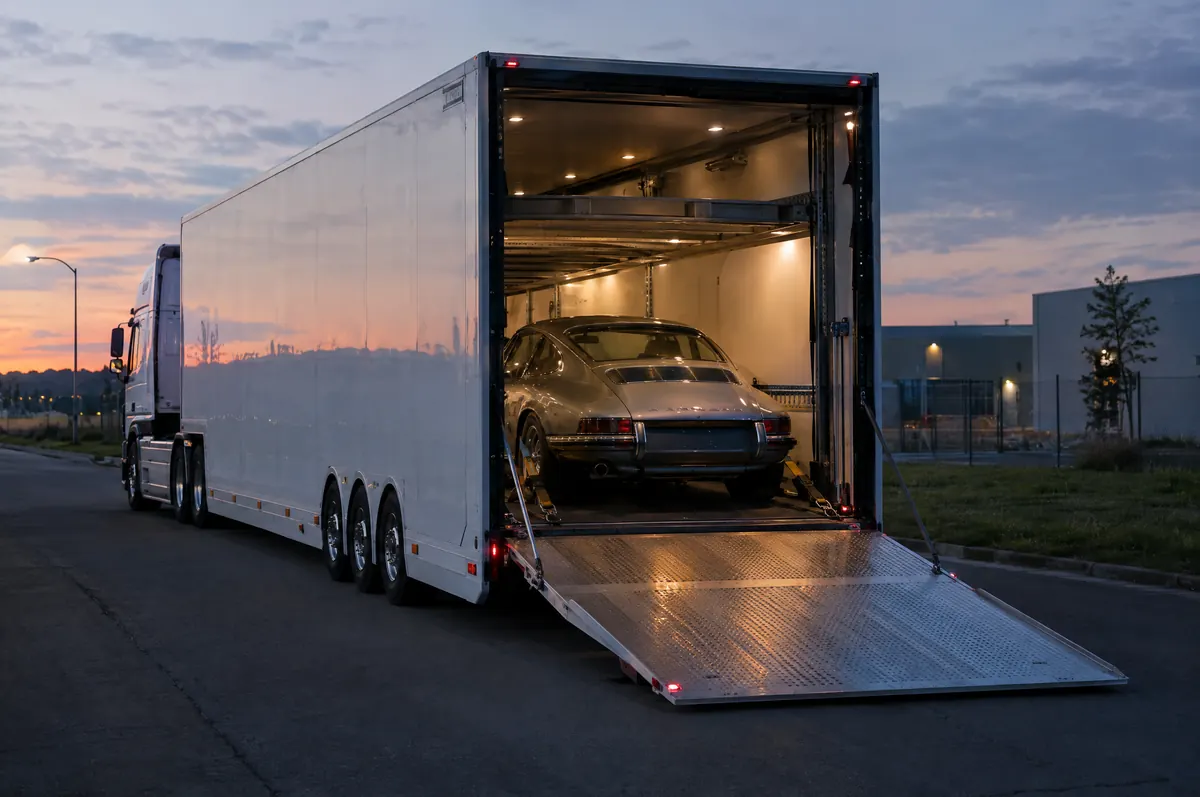
Open transport suits most cars and is the cheapest option. Enclosed transport is worth considering for luxury, classic or exotic cars, or when the car will travel through harsh weather.
Open vs. enclosed shipping
How much does it cost to ship a car from Utah?
Published figures put open transport from Utah at about $250 – $680 to Nevada and $835 – $4,270 to New York. Enclosed transport runs 30–60% higher in the same studies. Distance, vehicle size, season and pickup location change the price.
Car shipping cost guideHow much does car shipping cost per mile in Utah?
Published figures for longer Utah routes run about $0.37–$1.89 per mile for open transport and $0.48–$3.02 per mile for enclosed. Short trips cost more per mile than long ones.
Car shipping cost per mileHow much does it cost to ship a car within Utah?
Published figures put an in-state move of about 100 miles, such as Salt Lake City to West Valley City, at $240 – $660 on an open carrier.
Utah car shipping guide
Everything to know about shipping a car to or from Utah: costs, routes, preparation and what to expect.
- How prices are set and how to compare quotes
- Choosing open or enclosed transport
- Getting your car ready for pickup
Where these figures come from
Published industry studies, not Haulwide shipments. Checked Sep 16, 2026.
- SGT Auto Transport(opens in a new tab)
Published Sep 9, 2026. 30 months of the company's own shipping data (January 2024 to June 2026) across all 50 states and 1,581 state-to-state lanes, limited to completed single-vehicle open transport deliveries and mix-adjusted for distance.
- Move.org(opens in a new tab)
Published Mar 4, 2026. Nearly 800 broker quotes analyzed, priced for a running 2025 Toyota Camry with a one-week lead time using October 2025 quotes.
- Kelley Blue Book(opens in a new tab)
Published Jan 12, 2026. Quotes requested from eight transport companies for a 2025 Honda Accord on three routes from Orlando, on standard open carriers.
- Direct Connect Auto Transport(opens in a new tab)
No publication date given. The company's own carrier data for an operable sedan on open transport; the page states no publication date.
- RoadRunner Auto Transport(opens in a new tab)
Published Sep 1, 2026. The company's completed shipment history, which it describes as over 1 million vehicles delivered across 30+ years, updated September 2026. Its nationwide average is $1,215 at a median distance of 987 miles and a median $1.23 per mile.
The sources disagree, so figures are shown as the span across them rather than a single price. Pricing methodology
Ready to ship your car to or from Utah?
Enter your route to compare estimated prices, pickup dates and transport companies.