Table of contents
Quick answer
Your car travels by truck to a port, then by ship to San Juan, most often from Jacksonville, Florida, where three carriers run the route. Budget for two costs, not one: the shipping itself, and Puerto Rico's excise tax on arrival. That tax starts at a $637.50 minimum and climbs steeply with the car's island value, reaching $9,253.10 plus 34% of anything above $44,890. Check your own VIN in Hacienda's SURI estimator before you book anything, because for a newer car the tax can be the larger number by far.
The excise tax, which is the real decision
Most guides to shipping a car to Puerto Rico quote a shipping price and move on. That price is the smaller half of the story. Puerto Rico charges arbitrios, an excise tax, on a vehicle brought onto the island, and it is charged on the value the Departamento de Hacienda assigns the car, not on what you paid for it or what the shipping cost.
Read those bands against a real car. A tidy ten-year-old sedan may land near the bottom and cost a few hundred dollars. A three-year-old SUV that Hacienda values at $35,000 sits in the fifth band, which is $5,575.15 plus 27.2% of the excess — several times what the voyage costs. The tax is what decides whether shipping the car makes sense at all, or whether selling it on the mainland and buying on the island is the better move.
How the car actually gets there
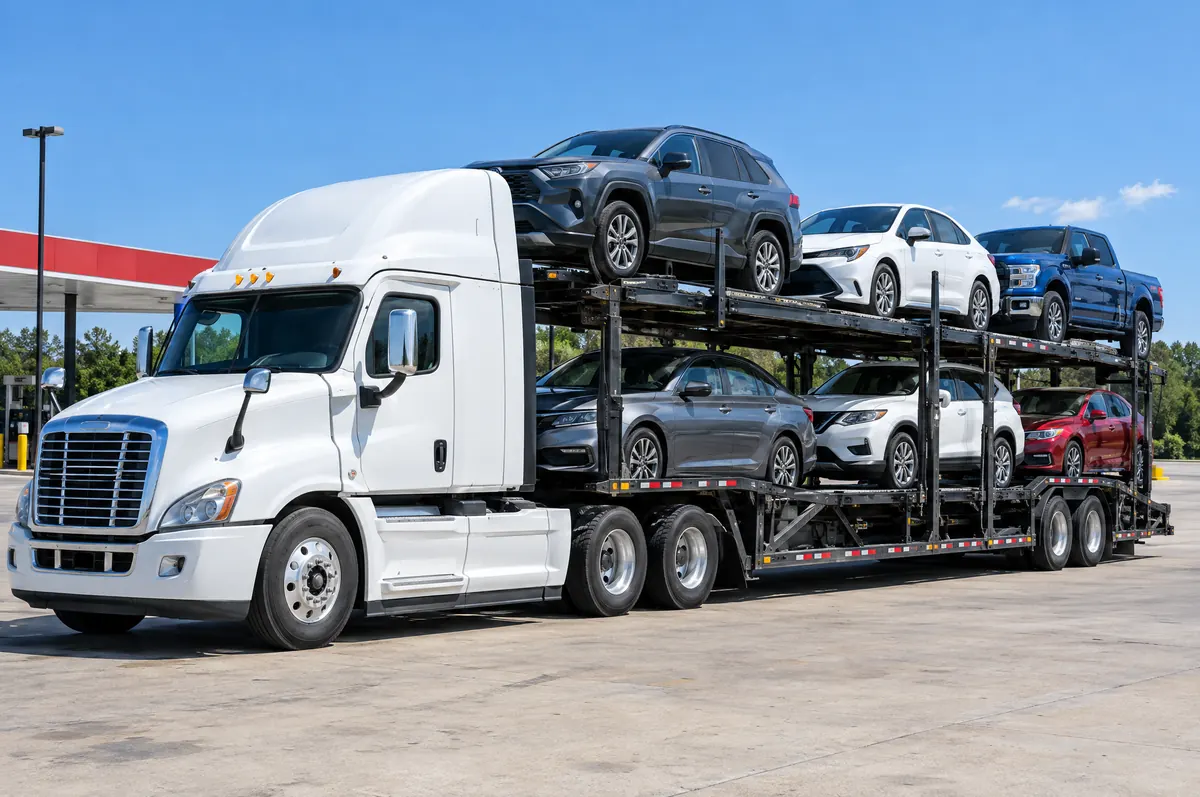
The journey has two legs. First a truck takes the car to a port, usually Jacksonville, Florida, which is the main gateway for Puerto Rico traffic. Then it sails as roll-on/roll-off freight to San Juan, driven onto the ship rather than packed in a container.
Those three are the whole market from that port, and that is not an accident of competition.
So this is domestic shipping with a short list of carriers. There is no customs entry, no import duty and no passport for the car, but there is also no way to shop the route to a hundred operators the way you would a cross-country move.
Preparing the car for a ship
Ocean carriers are stricter than road carriers, and the rule that catches people out is about belongings. Crowley's own guidance is blunt: "No personal items will be accepted inside the vehicle, including umbrellas, visor shades, CDs, boxes, suitcases, etc."
- Empty the car completely, including the glovebox, door pockets and trunk. A spare tire and jack are normally the only exceptions
- Expect a fuel limit. A quarter tank is the usual instruction, and an overfull tank can get a car turned away at the terminal
- Wash it before you go. A clean car is easier to inspect, and agricultural cleanliness matters on island routes
- Make sure the VIN is readable and matches your paperwork exactly
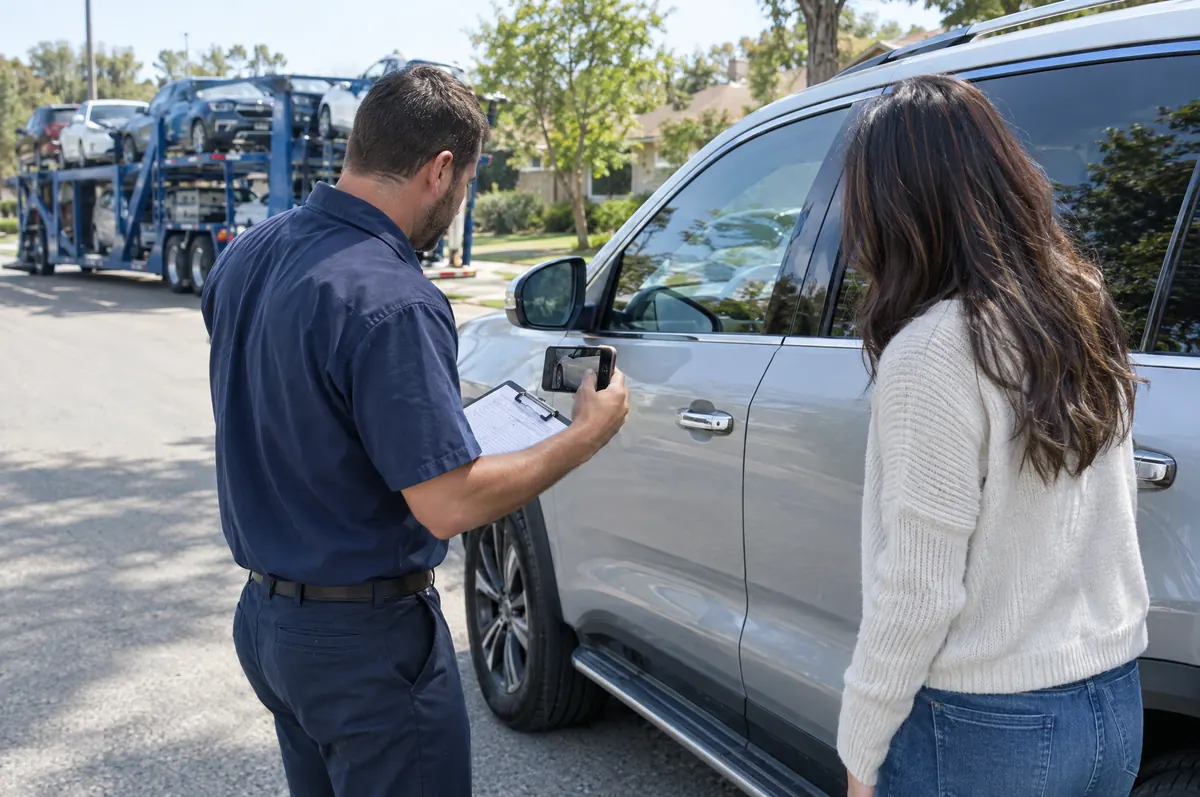
- Photograph every panel the day you hand it over, with the date visible
- Take the toll transponder off the windshield and cancel or move it
Carrier requirements differ in detail and change, so ask your carrier for their current list in writing rather than trusting any summary, including this one. A car rejected at the terminal is a wasted trip and often a storage charge.
Paperwork and the loan problem
You will need the title and registration, photo identification, and the booking paperwork from the carrier. The complication worth knowing early is finance: if there is a loan or lease on the car, the lender owns it, and carriers ask for written authorization from the lienholder before they will load it.
That letter takes time. Lenders are not quick, and some refuse to let a financed vehicle leave the mainland at all. Ask your lender before you book a sailing, not the week you plan to travel.
Once the car lands, registering it in Puerto Rico is its own process through DTOP, and the excise tax has to be settled before the car is yours to drive on the island.
If the car is electric
Ask before you plan anything else. Ocean carriers have grown wary of lithium-ion batteries at sea, and two of the carriers serving the other island routes have stopped accepting electric and plug-in hybrid vehicles outright.
Those two policies cover Hawaii and Alaska rather than Puerto Rico, and we have not found a published refusal on the Puerto Rico route. That is exactly why you should ask your carrier directly and get the answer in writing: a policy that has already spread to two ocean routes is not a safe thing to assume about a third.
Is it worth shipping at all?
For a car you love, an unusual car, or one you own outright and intend to keep for years, shipping usually wins. For an ordinary car with a few years left in it, do the arithmetic honestly before you commit.
| Cost | Where the number comes from |
|---|---|
| Truck to the port | A quote for your address to Jacksonville, or wherever your carrier sails from |
| The voyage | The ocean carrier's quote, in writing |
| Excise tax on arrival | Hacienda's SURI estimator, using your VIN |
| Port and terminal fees | Ask the carrier what is not in the headline price |
| Days without a car | Both ends, plus the time to clear the tax |
| What the car would fetch on the mainland | Sell it and buy on the island is a real option, not a failure |
Truck to the port
- Where the number comes from
- A quote for your address to Jacksonville, or wherever your carrier sails from
The voyage
- Where the number comes from
- The ocean carrier's quote, in writing
Excise tax on arrival
- Where the number comes from
- Hacienda's SURI estimator, using your VIN
Port and terminal fees
- Where the number comes from
- Ask the carrier what is not in the headline price
Days without a car
- Where the number comes from
- Both ends, plus the time to clear the tax
What the car would fetch on the mainland
- Where the number comes from
- Sell it and buy on the island is a real option, not a failure
Frequently asked questions
How much is the excise tax on a car in Puerto Rico?
It follows a published scale: a $637.50 minimum at the bottom, then bands rising to $9,253.10 plus 34% of anything above $44,890 in island value. It is charged on the value Hacienda assigns your car, not on what you paid, so check your VIN in the SURI estimator before you book.
Do I need customs paperwork or a passport for the car?
No. Puerto Rico is part of the United States, so there is no customs entry and no import duty. What you do owe is Puerto Rico's own excise tax, which is a separate thing entirely.
How long does it take?
Two legs: the road move to the port, which depends on where you start, then the sailing. Ask your carrier for the sailing schedule rather than an average, since departures are weekly rather than daily and missing one costs days.
Can I pack belongings in the car?
No. Crowley states plainly that no personal items are accepted inside the vehicle, down to umbrellas and visor shades. Ship belongings separately.
What you can leave in a carCan I ship a financed car to Puerto Rico?
Usually, but only with written permission from the lender, and some lenders refuse. Ask before you book a sailing, because the letter can take longer than the shipping does.
Leased and financed cars
Sources
- Departamento de Hacienda, Arbitrios en el caso de vehiculos
- JAXPORT, How to ship a car to Puerto Rico
- 46 U.S. Code 55102
- Matson car shipping FAQ
Written and reviewed by the Haulwide editorial team. Editorial policy