Table of contents
- What to do the moment you see damage
- Who pays for damage
- How to file the claim
- Federal deadlines carriers must follow
- If your claim is denied or ignored
- How to avoid a claim in the first place
- Getting a repair estimate
- What to put in your claim letter
- What claims often don't cover
- A typical claim timeline
- FAQs
Quick answer
Note the damage on the bill of lading before you sign, photograph it, and send a written claim to the carrier with your photos, the BOL and a repair estimate. For interstate shipments, carriers must give you at least 9 months to file, acknowledge your claim within 30 days and pay, decline or offer a settlement within 120 days. If you can't resolve it, you can involve your insurer, file an FMCSA complaint, or go to small claims court.
What to do the moment you see damage
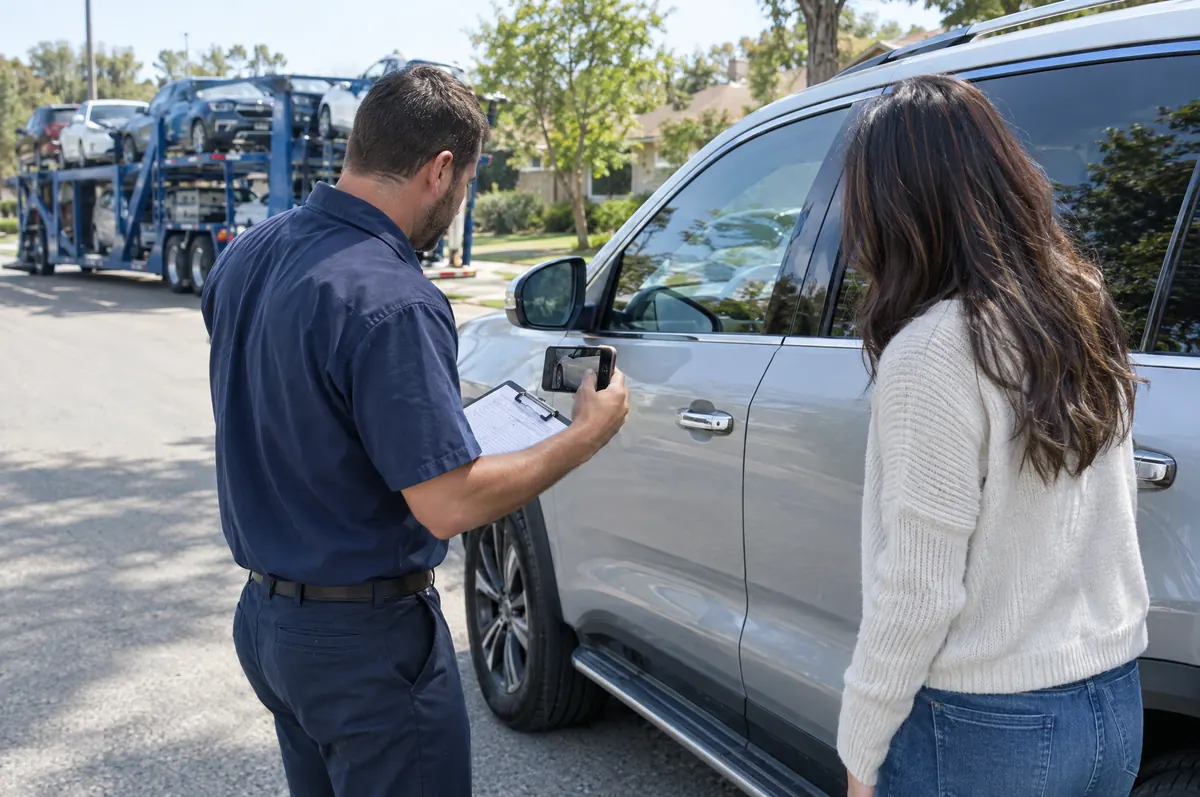
- Write it on the bill of ladingDescribe each new mark before you sign, and ask the driver to acknowledge it.
- Photograph everythingClose-ups and wide shots of each area, with the truck and the date visible if you can.
- Keep your copy of the BOLYour signed copy with the damage noted is your main evidence.
- Tell the carrier and broker in writingEmail both the same day, with photos, so there is a dated record.
Who pays for damage
The carrier that moved your car is responsible for damage in transit, and its cargo insurance usually pays approved claims. A broker doesn't carry the car, but a good broker will help you reach the carrier and push the claim forward.
- Ask for the carrier's certificate of insurance before pickup
- Check the cargo limit and any deductible
- Ask your own auto insurer whether your policy covers the car in transit
How to file the claim
Federal rules describe what counts as a proper written claim: it identifies the shipment, says the carrier is responsible for the damage, and asks for a specific amount of money.
- Your name, contact details and order or load number
- The carrier's name and USDOT or MC number
- Pickup and delivery dates and addresses
- The signed bill of lading showing the damage
- Pickup and delivery photos
- At least one written repair estimate from a body shop
- The amount you are claiming
Federal deadlines carriers must follow
| Step | Time limit |
|---|---|
| Filing your claim | At least 9 months, if the carrier sets a limit |
| Carrier acknowledges your claim | Within 30 days |
| Carrier pays, declines or offers a settlement | Within 120 days |
| If it's still open after 120 days | Written status update then, and every 60 days |
| Suing after a written denial | At least 2 years, if the carrier sets a limit |
Filing your claim
- Time limit
- At least 9 months, if the carrier sets a limit
Carrier acknowledges your claim
- Time limit
- Within 30 days
Carrier pays, declines or offers a settlement
- Time limit
- Within 120 days
If it's still open after 120 days
- Time limit
- Written status update then, and every 60 days
Suing after a written denial
- Time limit
- At least 2 years, if the carrier sets a limit
Sources: 49 U.S.C. 14706(e), 49 CFR Part 370
These are minimums set by federal law. Your contract may give you a specific deadline, so check it and file as soon as you can: evidence is freshest right after delivery.
If your claim is denied or ignored
- Ask for the reason in writingA denial should explain why. Reply with any evidence that addresses it.
- Involve your brokerBrokers have ongoing relationships with carriers and can often move a stalled claim.
- Contact your own insurerIf your policy covers the car, your insurer may pay and pursue the carrier.
- File a federal complaintReport the carrier to the FMCSA if it fails to follow the rules or acts deceptively.
- Consider small claims courtFor many repair bills, small claims court is a practical last step.
How to avoid a claim in the first place
- Choose a carrier with active authority and adequate cargo insurance
- Consider enclosed transport for valuable or freshly painted cars
- Remove loose parts, toll tags and personal items
- Take detailed dated photos before pickup
Getting a repair estimate
A written estimate from a licensed body shop turns “it's scratched” into a specific amount the carrier can approve. Get it soon after delivery, and consider a second estimate for larger repairs.
- Ask the shop to itemize parts, paint and labor
- Make sure the estimate describes only the new damage on your bill of lading
- Keep receipts for towing or a rental car if the car can't be driven
What to put in your claim letter
- Identify the shipmentYour name, order or load number, vehicle and VIN, pickup and delivery dates and addresses.
- Say what happenedDescribe the damage you found at delivery and point to the note on the bill of lading.
- Hold the carrier responsibleState that the damage happened while the carrier had your car.
- Ask for an amountRequest a specific sum, matching your repair estimate.
- Attach your evidenceBill of lading, pickup and delivery photos, estimate and receipts.
What claims often don't cover
Carrier cargo policies differ, so ask for the details before pickup. Claims are commonly disputed or excluded when:
- The damage wasn't noted on the bill of lading at delivery
- The damage was already recorded at pickup
- Personal items packed in the car were lost or broken
- A mechanical problem wasn't caused by loading or transport
- Loose or aftermarket parts weren't secured or removed
A typical claim timeline
- Delivery dayNote damage on the bill of lading, take photos and email the carrier and broker.
- First weekGet repair estimates and send a written claim with all your evidence.
- Within 30 daysThe carrier must acknowledge your claim in writing.
- Within 120 daysThe carrier must pay, decline or make a firm settlement offer, or update you in writing.
Frequently asked questions
How long do I have to file a car shipping damage claim?
For interstate shipments, a carrier can't give you less than 9 months to file. Check your contract for its exact deadline and file as soon as possible.
How long does the carrier have to respond?
It must acknowledge a proper written claim within 30 days and pay, decline or make a firm settlement offer within 120 days, with written updates every 60 days after that if the claim is still open.
Can I still file if I didn't note damage on the bill of lading?
You can, but it is much harder to prove the damage happened in transit. Send photos and a written notice to the carrier right away.
Is the broker responsible for damage?
Usually not; the carrier and its insurer are. A broker should still help you contact the carrier and follow up on the claim.
Broker vs. carrierWill I have to pay a deductible?
Some carrier policies have deductibles, and some carriers pay small claims themselves. Ask before pickup so you know what to expect.
Where can I complain about an auto transporter?
The FMCSA National Consumer Complaint Database accepts complaints about auto transporters and brokers, online or at 1-888-368-7238.
Should I claim on my own car insurance?
Start with the carrier. If the carrier's insurer won't pay, your own policy may cover transport damage, and your insurer may then pursue the carrier. Ask your agent.
Is it worth filing a claim for a small scratch?
Yes, if the scratch is new and noted on the bill of lading. Carriers often settle small claims quickly, and the record helps if more damage turns up later.
Sources
Written and reviewed by the Haulwide editorial team. Editorial policy