Table of contents
Quick answer
Door-to-door is the standard today: the truck comes as close to your address as it can legally and safely get, and you meet it there. Terminal-to-terminal means dropping your car at a storage yard and collecting it from another, and it has become rare — only two of the companies in our directory publish it as a service. It can still be the right choice in a dense city, or when your dates are loose and your car is going to or from an auction or port anyway. Treat any promised saving with suspicion until you have both quotes in writing, including storage.
What the two terms actually mean
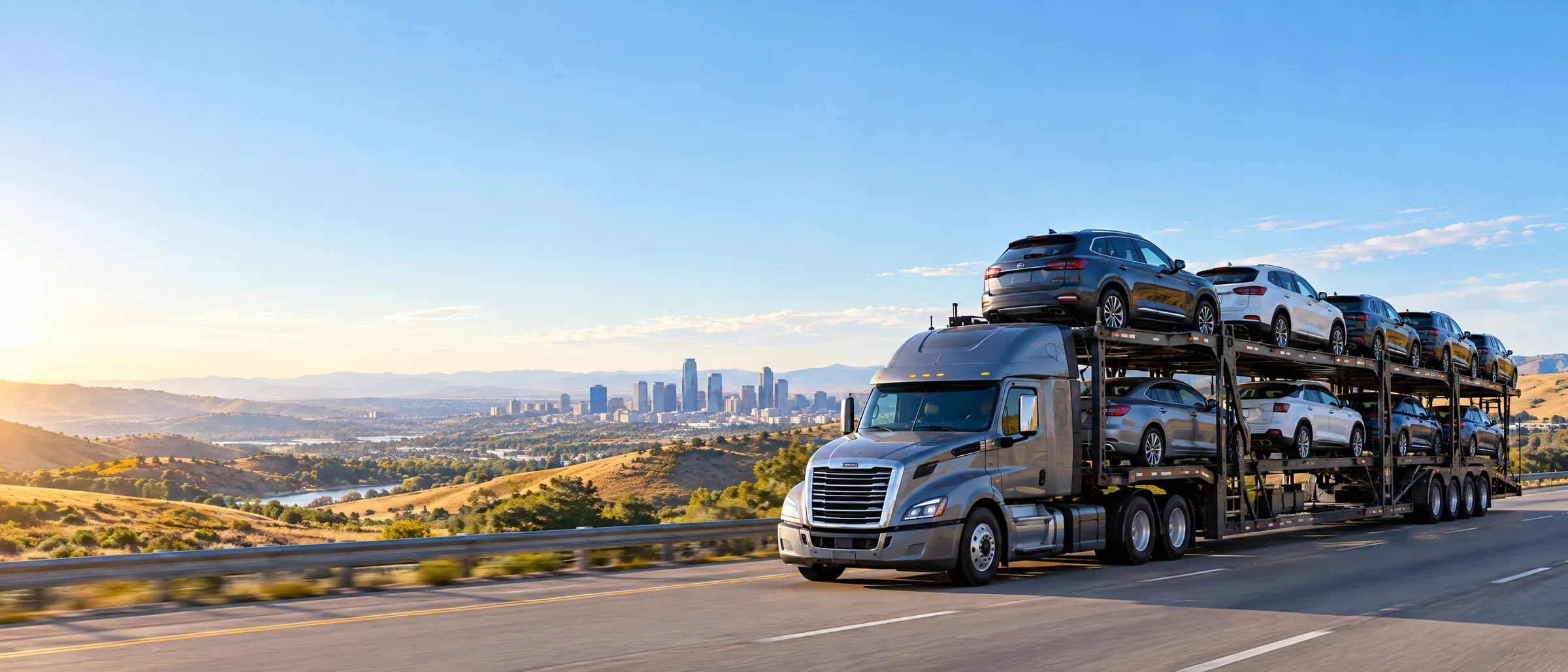
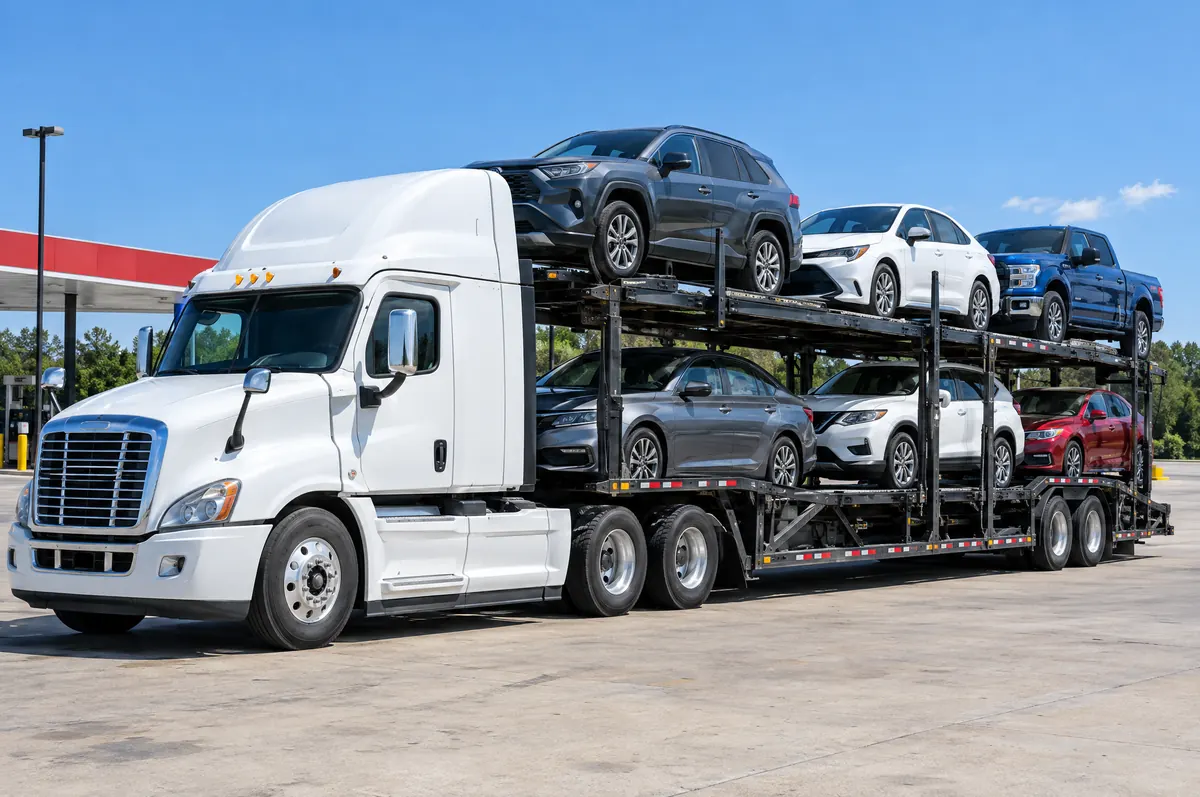
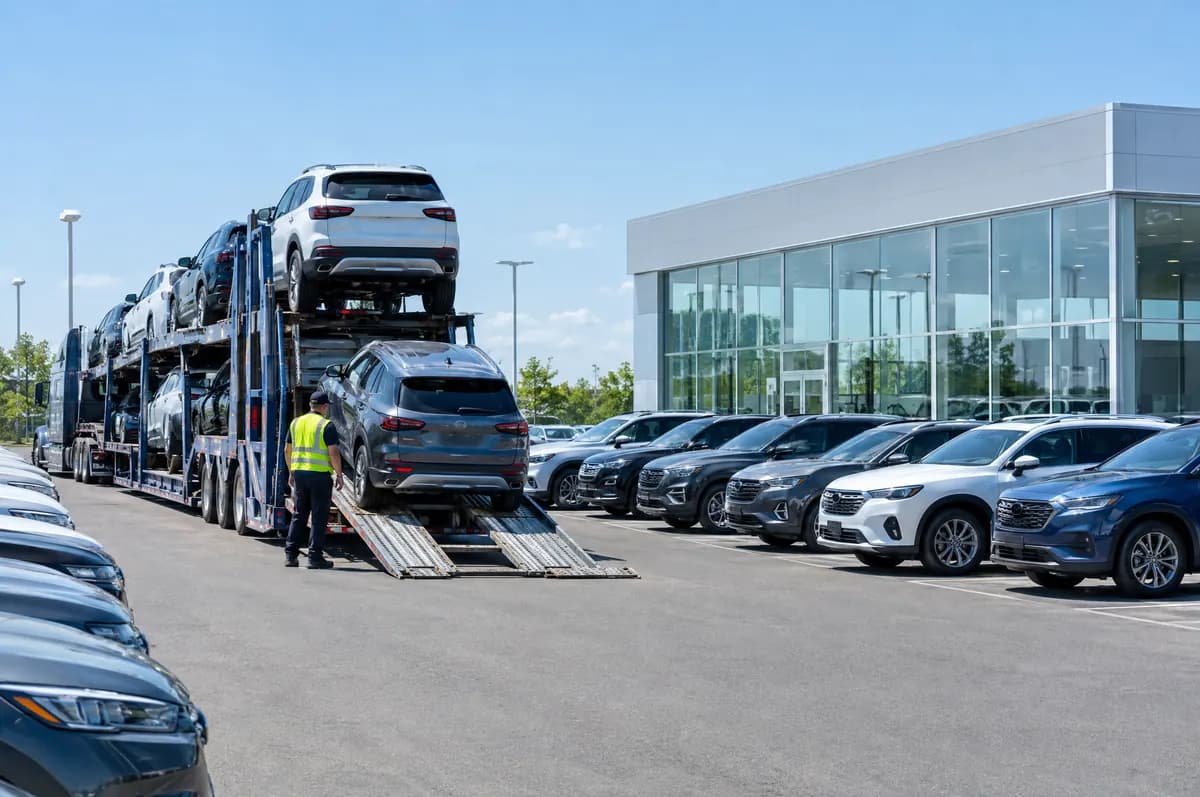
Door-to-door does not mean the truck parks outside your front door. A loaded car carrier is roughly 75 to 80 feet long and cannot turn into most residential streets, get under low branches, or clear a height-restricted garage. What door-to-door really means is that the driver brings the truck as close to your address as the law and the road allow, then calls you to meet at a nearby wide street, a grocery store parking lot or a gas station.
Terminal-to-terminal means you drive your car to a yard the company uses, hand over the keys, and someone else loads it later. At the other end, the car sits in a second yard until you collect it. The truck itself does the same journey either way; what changes is who moves the car at each end, and how long it sits still.
How rare terminal service has become
Most articles comparing these two options present them as an even choice. They aren't. When we checked the published service lists of the sixteen companies in our directory, only two of them offered terminal-to-terminal at all: Mercury Auto Transport and Ship A Car Inc. Every other company lists door-to-door, open and enclosed transport, and nothing resembling a terminal network.
That is worth knowing before you spend an afternoon asking for terminal quotes. If you want this option, you are choosing from a much shorter list than the advice pages suggest, and the two companies that offer it are not obliged to have a yard near you: a terminal in the right city is the whole point, and there may not be one.
Why the decline? Terminals are storage, and storage costs money to rent, staff and insure. Brokers dispatch to carriers who want full trucks and direct stops, and a carrier earns the same whether your car came from a yard or your street. The yards that remain tend to serve auctions, dealers and ports rather than individual customers.
When terminal-to-terminal is the better choice
It is not always the wrong answer. There are four situations where a yard genuinely beats a street meeting.
- Your address is somewhere a truck cannot reasonably reach: Manhattan, central San Francisco, a gated community that refuses access, or a mountain road with no turning space
- You cannot be present. If you are already flying and nobody can hand over keys, a yard with staffed opening hours is easier than coordinating a driver's arrival window
- Your dates are loose. A terminal lets the carrier fit your car into a truck that suits its route, which is exactly the flexibility that earns a better price
- The car is going to or from an auction, a dealer or a port, which is a yard already — adding a second yard changes nothing
Outside those cases, the practical middle ground is better than either extreme: keep door-to-door and agree to meet the driver at a wide road or a large parking lot a few minutes away. You get the carrier's preferred, simpler stop without paying storage or handing your car to a yard.
What to ask before you agree to a terminal
- Where exactly is the yard, and what are its opening hours on the day I need it?
- Is it fenced and staffed, and is the car stored indoors or outside?
- How many days of storage are included, and what is the daily charge after that?
- Who moves my car inside the yard, and is that person insured to drive it?
- Does the carrier's cargo insurance cover the car while it sits in the yard, or does yard cover apply? Ask for both in writing
- What happens if the truck is delayed and my included days run out?
Deciding in one minute
| Your situation | Choose | Why |
|---|---|---|
| Ordinary suburban address | Door-to-door | The driver meets you a street away at worst, with no storage to pay for |
| Dense city center, no truck access | Terminal, if one exists nearby | A yard on the edge of the city may be the only place a carrier can load |
| You are away on the pickup date | Terminal, or a trusted person at the door | A staffed yard has hours; a driver has a window |
| Tight deadline | Door-to-door | Every yard adds days at both ends |
| Car bought at auction | Terminal | It is already sitting in a yard with staff who load carriers daily |
| High-value or classic car | Door-to-door, enclosed | Fewer people drive the car, and the inspection happens in front of you |
Ordinary suburban address
- Choose
- Door-to-door
- Why
- The driver meets you a street away at worst, with no storage to pay for
Dense city center, no truck access
- Choose
- Terminal, if one exists nearby
- Why
- A yard on the edge of the city may be the only place a carrier can load
You are away on the pickup date
- Choose
- Terminal, or a trusted person at the door
- Why
- A staffed yard has hours; a driver has a window
Tight deadline
- Choose
- Door-to-door
- Why
- Every yard adds days at both ends
Car bought at auction
- Choose
- Terminal
- Why
- It is already sitting in a yard with staff who load carriers daily
High-value or classic car
- Choose
- Door-to-door, enclosed
- Why
- Fewer people drive the car, and the inspection happens in front of you
Frequently asked questions
Is terminal-to-terminal actually cheaper?
Sometimes the transport line is lower, but storage charges, two extra journeys for you and the added days often cancel it out. No published study measures the difference, so compare two written quotes for your own route rather than trusting a figure from an article.
Which companies still offer terminal shipping?
Far fewer than you would think. Of the sixteen companies in our directory, two publish terminal-to-terminal service: Mercury Auto Transport and Ship A Car Inc.
Browse the directoryWhat if my street is too narrow for the truck?
Nothing goes wrong: the driver calls and you meet at a wider road or a nearby parking lot, usually within a few minutes' drive. That is normal door-to-door service, not a problem or an extra charge.
How long can my car sit at a terminal?
As long as you keep paying. Yards typically include a few days and charge daily after that, so ask for the number of free days and the daily rate before you hand over the keys.
About this article
Written and reviewed by the Haulwide editorial team. Editorial policy