Table of contents
Quick answer
You don't have to tip a car transport driver: the price you pay covers the job, and no official guideline sets an amount. If a driver goes out of their way, such as delivering to a tight street, waiting for you or handling a non-running car with care, a small cash tip, a meal or cold drinks is a welcome thank-you. A strong review naming the driver often helps them more.
Is tipping expected?
No. Car transport is priced as a service, like freight, not like restaurant service. Drivers are paid by their carrier or earn the carrier's rate if they own the truck, and your quote or contract covers that.
There is no published or official standard for tipping auto transport drivers. Any figure you see online is opinion, so decide based on the service you received.
When a tip makes sense
- The driver came to a hard-to-reach address instead of asking you to meet elsewhere
- Pickup or delivery happened early in the morning, late at night or in bad weather
- The driver waited for you or adjusted the time to suit you
- Your car doesn't run and needed extra work to load and unload
- The driver kept you updated throughout the trip
- Your car arrived clean, on time and exactly as it left
What to give instead of, or as well as, cash
A small cash tip
Simple and always useful on the road. Hand it over separately from the balance you owe.
Food and drinks
Cold water, coffee or a meal are practical thanks for a long day of driving.
A detailed review
Name the driver and describe what went well. Reviews help carriers win more work.
What drivers value more than a tip
Truck drivers work under federal limits on driving hours, so every hour spent waiting or searching for an address is time they can't drive.
- Answer your phone on pickup and delivery days
- Have the car clean, empty and ready to load
- Suggest a wide, legal spot where a large truck can stop
- Have the keys and payment ready
- Be on time for the inspection
When not to tip
- When you have found new damage; note it on the bill of lading first
- When a driver asks for extra money beyond your agreed balance
- When you are paying the balance and a tip would muddle the receipt
How car transport drivers are paid
Some drivers work for a carrier and are paid by that company. Others own their truck and run as small carriers, earning what brokers pay for each car they move, then covering fuel, insurance, repairs and tolls themselves. Either way, the price on your order is what pays for the trip.
That's why a tip is a personal thank-you rather than part of the driver's pay, and why reliable, easy loads matter so much to drivers: time spent waiting is time they aren't driving.
Tipping in common situations
| Situation | A tip or thank-you makes sense when… |
|---|---|
| Standard open transport | The driver was on time, communicative and careful |
| Non-running car | Loading took extra time, equipment or effort |
| Enclosed transport | The driver took special care with a valuable car |
| Several cars | The driver handled a long pickup or delivery smoothly |
| Tight streets or late hours | The driver came to you instead of a meeting point |
| Dealer or auction pickup | Usually not expected; the business handles the handoff |
Standard open transport
- A tip or thank-you makes sense when…
- The driver was on time, communicative and careful
Non-running car
- A tip or thank-you makes sense when…
- Loading took extra time, equipment or effort
Enclosed transport
- A tip or thank-you makes sense when…
- The driver took special care with a valuable car
Several cars
- A tip or thank-you makes sense when…
- The driver handled a long pickup or delivery smoothly
Tight streets or late hours
- A tip or thank-you makes sense when…
- The driver came to you instead of a meeting point
Dealer or auction pickup
- A tip or thank-you makes sense when…
- Usually not expected; the business handles the handoff
A smooth delivery day, step by step
- Confirm the timeAnswer the driver's call and agree on a time and a place a large truck can stop.
- Be readyHave your pickup photos, your copy of the bill of lading and the balance in the agreed form.
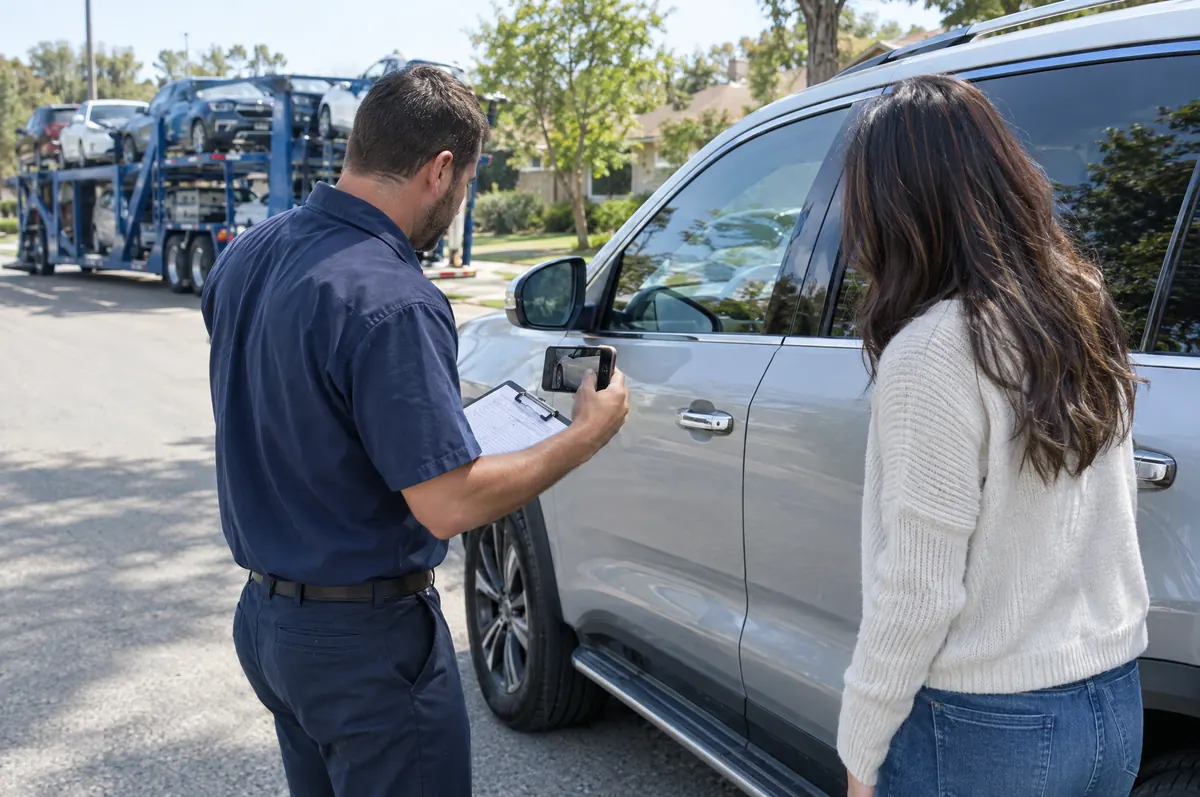
- Inspect the carWalk around it in good light and compare it with your photos.
- Sign and payNote any new damage, sign the bill of lading, pay the balance and get a receipt.
- Say thanksA tip, a drink or a detailed review, if the service earned it.
Why easy loads matter to drivers
A car carrier often has several pickups and deliveries in a single day, in different cities. A late customer, a street a truck can't enter or a car that won't start can push every other stop back, sometimes past the driver's legal hours for the day.
- Give the driver a phone number you'll answer
- Mention low branches, narrow streets or gated entrances in advance
- Tell the company early if the car doesn't run
- Remove toll tags and loose items before pickup
Frequently asked questions
Do you have to tip a car transport driver?
No. Tipping is optional, and the price you pay covers the transport. A tip is a thank-you for service that went beyond the basics.
How much should you tip a car shipping driver?
There is no official guideline. If you choose to tip, give an amount that feels right for the extra effort, or offer food and drinks instead.
Should I tip at pickup or delivery?
At delivery, after you have inspected the car and signed the bill of lading, so you know how the trip went.
Should I tip the broker?
No. Brokers are paid through their fee. If they did a great job, a detailed review is the best thanks.
Write a reviewWhat if a driver asks for a tip or extra money?
You don't have to pay anything beyond the balance on your order. Contact the company that booked the shipment if a driver asks for more.
Is a review better than a tip?
Often, yes. A specific review that names the driver helps the carrier win future jobs, which helps the driver more than a one-time tip.
Write a reviewIs it okay to offer food instead of money?
Yes. Cold drinks, coffee or a packed meal are a practical and appreciated thank-you on a long day of driving.
Sources
Written and reviewed by the Haulwide editorial team. Editorial policy