Table of contents
- Key takeaways
- What Drives the Average State to State Car Shipping Cost?
- How Do Distance and Route Popularity Change Per-Mile Pricing?
- When Do Seasonal Swings Hit Common Interstate Routes?
- Sample Cost Table for Popular State to State Lanes
- How Can You Lock In the Best State to State Rate?
- Your Next Step
- FAQs
Quick answer
Shipping a car between states usually costs somewhere between $0.50 and $2.00 per mile, which works out to a few hundred dollars for a short regional hop or well over a thousand for a coast-to-coast move. The exact figure depends on distance, how busy the route is, the season, and current fuel prices. Treat per-mile as a planning range rather than a quote: this breakdown walks through each driver so you can read an offer and know whether it is fair.
Key takeaways
- State to state car shipping cost typically runs between $0.50 and $2.00 per mile, with long routes paying less per mile than short ones.
- Fuel is the largest variable in the price: the U.S. average on-highway diesel price was $6.199 a gallon on October 5, 2026, up $2.488 from about $3.71 a year earlier — a rise of roughly two-thirds.
- Running a Class 8 truck cost carriers about $2.34 a mile in 2025, so a per-vehicle price far below that usually depends on a full trailer or backhaul capacity.
- Booking two to three weeks ahead and staying flexible on pickup dates is the most reliable way to lower a cross-state quote.
What Drives the Average State to State Car Shipping Cost?
Most cross-state moves land between $0.50 and $2.00 per mile for open transport, with the per-mile figure falling as total distance rises. Treat that span as a planning range, not a quote — your lane, vehicle and dates all move the number.
The single biggest swing factor is fuel. On October 5, 2026, the U.S. average on-highway diesel price was $6.199 a gallon, up $2.488 from about $3.71 at the same point a year earlier — a rise of roughly two-thirds. When diesel climbs, every quote climbs with it.
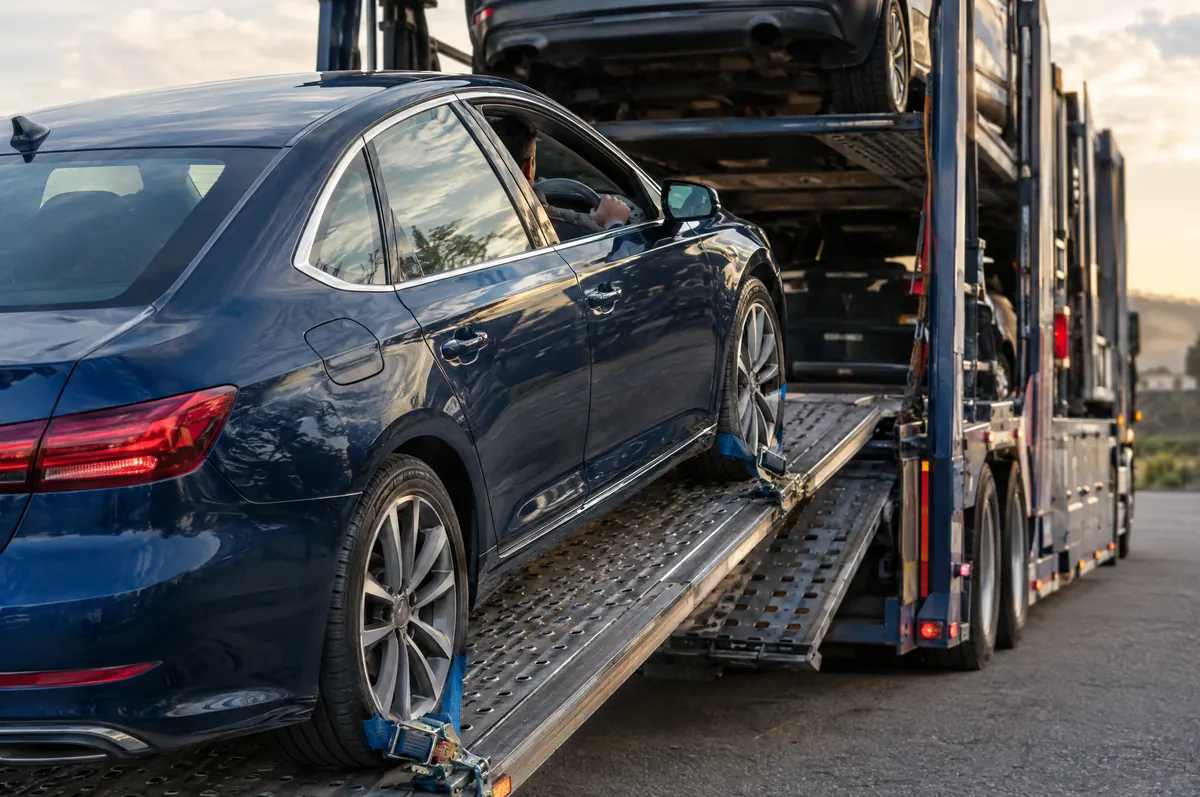
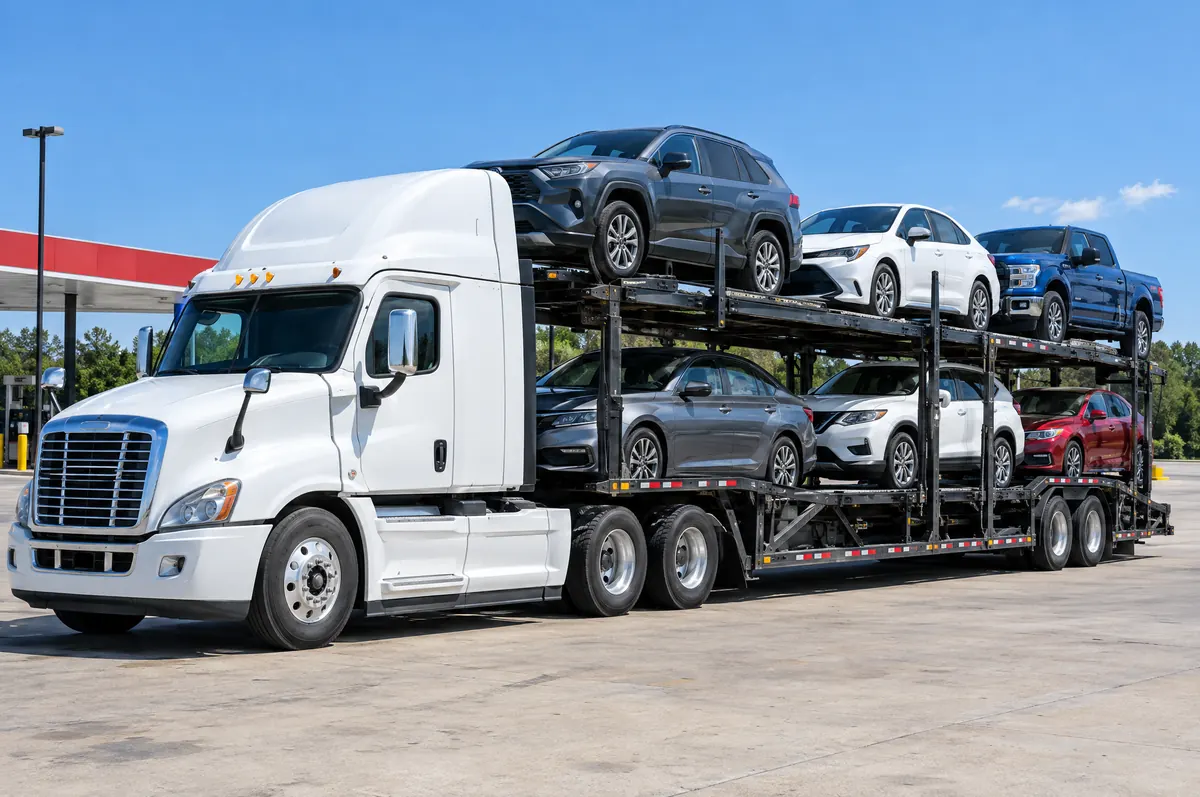
Carriers also price around their own cost floor. In 2025, the average Class 8 truck cost about $2.34 a mile to operate across fuel, repairs, insurance, driver pay and equipment — a record high. A single car on a 10-vehicle trailer carries only a slice of that cost, which is why per-vehicle pricing comes in well below the full operating rate. When a quote looks unusually low, the carrier is usually counting on a full load to make the math work.
Vehicle type matters too. A compact sedan slots easily onto a standard trailer, while a lifted truck or a large SUV takes more room and weight, so it costs more to move. A non-running vehicle needs special loading equipment and carries a surcharge.
How Do Distance and Route Popularity Change Per-Mile Pricing?
Longer routes almost always cost less per mile, even though the total price is higher. A 2,500-mile move might price near $0.60 a mile, while a 300-mile move can sit closer to $1.50 a mile. These are planning figures, not quotes, but the shape is consistent: loading, paperwork and dispatch are mostly fixed costs, so spreading them over more miles lowers the rate on each one.
Route popularity is the second lever. High-volume lanes have many carriers competing and plenty of return freight, which keeps prices competitive. A car moving from California to Texas rides a heavily traveled corridor, so a truck is rarely running empty in either direction. A move into a rural town off the main highways is different. The driver may have to deadhead, meaning drive empty, to reach the next job, and that lost mileage shows up in your quote.
Regional costs vary as well. In the same operating-cost analysis, carrier costs in 2025 ran highest in the Northeast at $2.52 a mile and lowest in the South-Central region at $2.23 (ATRI, 2026). Those regional gaps feed directly into what carriers charge on lanes that start or end there.
When Do Seasonal Swings Hit Common Interstate Routes?
Prices move with demand, and demand follows the calendar. The clearest pattern is the snowbird migration. Each fall, loads flow heavily from the Northeast and Midwest down to Florida and the Southwest as retirees head for warmer weather. Each spring, the direction reverses. On those lanes, the busy direction commands a premium while the quiet return direction often sells at a discount.
Summer is the broad nationwide peak. Families relocate while school is out, college students move, and the general moving season heats up. More cars chasing the same trailer space pushes rates higher from roughly May through August. Winter weather adds its own friction, since storms across mountain passes and the northern tier can delay pickups and nudge prices up on affected routes.
Sample Cost Table for Popular State to State Lanes
The ranges below are planning estimates for a standard car on open transport. They are not quotes, and they are not Haulwide-measured figures — your real price depends on the exact pickup and drop-off points, your vehicle, the season and your dates. Use them to sanity-check an offer, not to book one.
| Route | Approx. distance | Typical open-transport range | Approx. per mile |
|---|---|---|---|
| Los Angeles, CA to Phoenix, AZ | 375 mi | $450–$650 | $1.20–$1.73 |
| Dallas, TX to Chicago, IL | 925 mi | $700–$1,000 | $0.76–$1.08 |
| New York, NY to Miami, FL | 1,280 mi | $900–$1,300 | $0.70–$1.02 |
| Chicago, IL to Denver, CO | 1,000 mi | $750–$1,050 | $0.75–$1.05 |
| Los Angeles, CA to New York, NY | 2,790 mi | $1,400–$1,900 | $0.50–$0.68 |
| Seattle, WA to Atlanta, GA | 2,620 mi | $1,350–$1,850 | $0.52–$0.71 |
Los Angeles, CA to Phoenix, AZ
- Approx. distance
- 375 mi
- Typical open-transport range
- $450–$650
- Approx. per mile
- $1.20–$1.73
Dallas, TX to Chicago, IL
- Approx. distance
- 925 mi
- Typical open-transport range
- $700–$1,000
- Approx. per mile
- $0.76–$1.08
New York, NY to Miami, FL
- Approx. distance
- 1,280 mi
- Typical open-transport range
- $900–$1,300
- Approx. per mile
- $0.70–$1.02
Chicago, IL to Denver, CO
- Approx. distance
- 1,000 mi
- Typical open-transport range
- $750–$1,050
- Approx. per mile
- $0.75–$1.05
Los Angeles, CA to New York, NY
- Approx. distance
- 2,790 mi
- Typical open-transport range
- $1,400–$1,900
- Approx. per mile
- $0.50–$0.68
Seattle, WA to Atlanta, GA
- Approx. distance
- 2,620 mi
- Typical open-transport range
- $1,350–$1,850
- Approx. per mile
- $0.52–$0.71
Two patterns stand out. First, the per-mile rate shrinks sharply as distance grows, which is why the coast-to-coast lanes look cheap per mile despite the big total. Second, the short Los Angeles to Phoenix run carries the highest per-mile cost in the table, a direct result of fixed costs landing on fewer miles. Enclosed transport would add a premium on every one of these lanes, and an SUV or truck would push the totals higher.
How Can You Lock In the Best State to State Rate?
The most reliable way to lower a cross-state quote is to book two to three weeks ahead and stay flexible on your pickup window. Last-minute bookings force carriers to price for urgency, and a narrow date range removes their ability to fit you into an efficient route. Flexibility is leverage.
Gather several quotes before you commit, and compare them on the same terms: open versus enclosed, door-to-door versus terminal, and the same insurance coverage. Comparing side by side is exactly what Haulwide is built for, letting you weigh rates across providers and spot cheaper pickup dates on your route instead of calling brokers one at a time.
- Choose open transport unless you own a classic, exotic, or high-value vehicle that justifies the enclosed premium.
- Ship terminal-to-terminal if you can drop off and collect the car yourself, which avoids door-to-door surcharges.
- Time your move against the seasonal flow when possible, shipping on the quiet direction of snowbird lanes.
- Keep an eye on fuel trends, since quotes tend to firm up when diesel is climbing.
Your Next Step
Your next step is practical: pull your route's distance, check current quotes against the per-mile ranges above, and if your dates can flex, test a few pickup windows to see where the price drops. That small amount of comparison work is usually the difference between an average rate and a genuinely good one. Run your route through Haulwide to compare rates and test pickup dates, then book a verified carrier.
Frequently asked questions
How much does it cost to ship a car to another state?
Most state to state moves run between $0.50 and $2.00 per mile. Short hops under 500 miles sit at the top of that range, while coast-to-coast routes often drop below $1.00 per mile because carriers spread fixed costs over more distance.
Car shipping costWhy is shipping a car so expensive right now?
Fuel is the main reason. The U.S. average on-highway diesel price reached $6.199 a gallon on October 5, 2026, about $2.49 higher than a year earlier, which pushes carrier operating costs and quotes upward.
What affects car shipping costIs open or enclosed transport cheaper state to state?
Open transport is cheaper, and it is the standard method for most vehicles. Enclosed transport protects against weather and road debris but adds a meaningful premium, so most people reserve it for classic, luxury, or high-value cars.
Open vs. enclosed costDoes the time of year change state to state shipping prices?
Yes. Snowbird routes between the Northeast and Florida peak in fall and spring, and summer raises demand nationwide as families relocate. Booking outside these windows, or staying flexible on dates, usually lowers the quote.
Best time to ship a carHow is state-to-state shipping different from cross-country?
They are the same kind of move; cross-country just means a long state-to-state haul. The pricing logic is identical, but the per-mile rate is lower on a cross-country lane because fixed costs spread over more miles, so a short interstate hop costs more per mile and less in total.
Ship a car across the country
Sources
- U.S. Energy Information Administration
- FleetOwner: ATRI's 2026 operational costs of trucking
- Car carrier trailer
Written and reviewed by the Haulwide editorial team. Editorial policy