Table of contents
Quick answer
Get paid in a way that cannot be reversed, and confirm it with your own bank before the car leaves — not with a receipt the buyer shows you. Sign the title exactly as your state requires, because an error can void it. File the notice that releases you from liability straight away; California allows five days, Texas thirty. The buyer normally pays for and books the transport, which keeps the arrangement between them and the carrier.
Getting paid, which is the whole risk
Every other problem on this page is recoverable. This one is not. A remote buyer cannot hand you cash, which means every option involves trusting something, and the trick is knowing what each one actually promises.
- An overpayment, with a request to wire the difference back. This is the oldest one and it is still working.
- An escrow site the buyer chose and sent you a link to. If you did not find it independently, treat it as theirs.
- Payment from a third party "handling the purchase" who is not the buyer and will not explain why.
- Any pressure to release the car before your bank has confirmed. Urgency is the tell, and a real buyer will wait.
Related
Signing the title, and the mistake that voids it
A title is a controlled document and the form is unforgiving. Signing in the wrong box, correcting a mistake with a pen stroke, or leaving the buyer's name blank can all make it unacceptable to a DMV — and you will find out weeks later, through the buyer, at a distance.
- Sign only where the seller signs. If there are two registered owners, find out whether both signatures are needed before either of you signs anything.
- Never cross out or write over an error. Most states treat an altered title as void and require a duplicate, which takes weeks.
- Fill in the buyer's name. An "open title" left blank is illegal in many states and leaves the car registered to you.
- Record the odometer reading where the form asks for it.
- Photograph both sides of the completed title before it leaves your hands.
Write a bill of sale as well, even where your state does not require one. Two copies, both signed, showing the date, the price, the VIN and that the car is sold as is. It costs nothing and it is the document that settles an argument later.
The filing that ends your responsibility
This is the step sellers skip, and it is the one that produces a parking ticket, a toll bill or worse arriving months after the car went. Until the state is told, the car is still yours as far as its records are concerned.
Do it the same day if you can. It is usually an online form, it takes a few minutes, and the deadline in your state is probably shorter than you would guess. Keep the confirmation.
Who books the transport
Normally the buyer does, and normally they should. It is their car by the time it moves, the contract is theirs, and if something goes wrong in transit the claim is between them and the carrier rather than running through you.
If the buyer books it
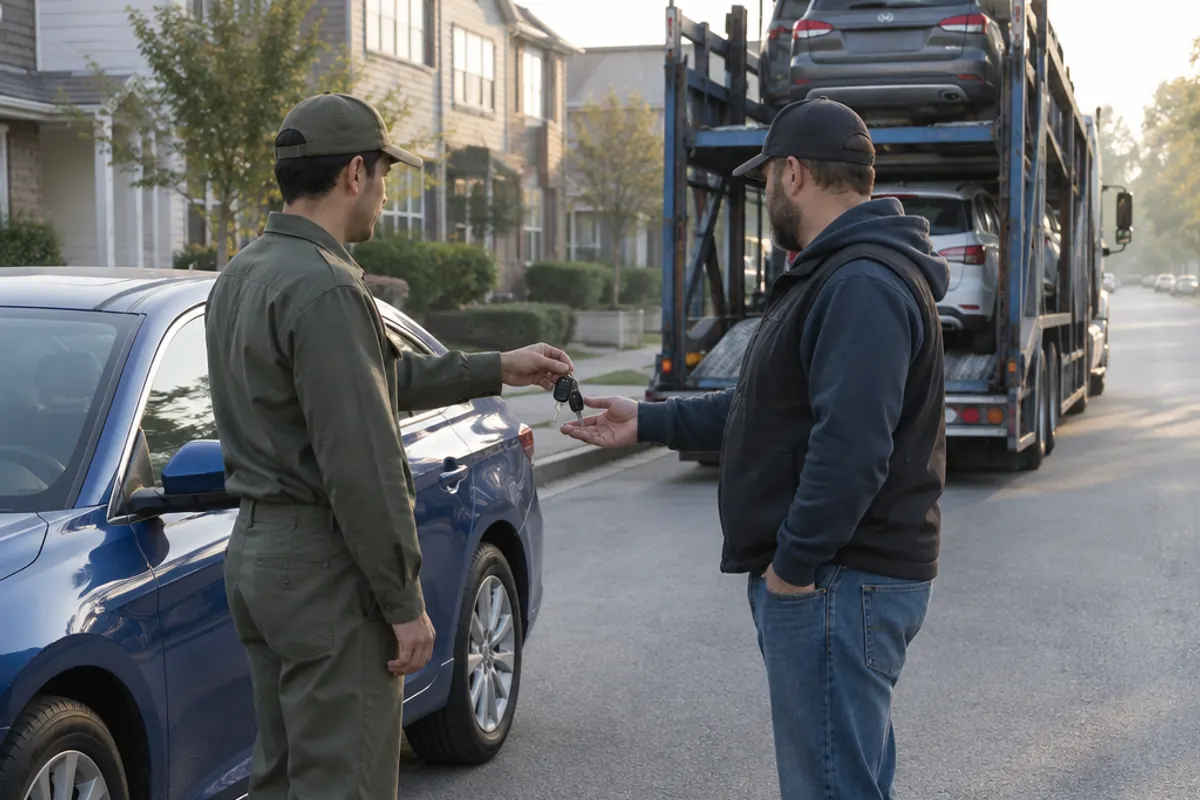
Your job is to hand the car over and sign an accurate condition report. Ask for the company's name in advance so you know who is turning up.
- Get the carrier or broker name before the day
- Be there, or name someone who can be
- Photograph the car before it is loaded
If you book it
Usually because the buyer asked you to arrange it and is paying for it. The contract is then yours, which means a delay or a dispute is yours to manage.
- Agree in writing who pays and when
- Do not pay for transport out of your own pocket first
- Make clear you are arranging, not guaranteeing, delivery
The day it is collected
- Confirm the money is irreversibly yoursWith your bank, that morning if the payment is recent. This is the last point at which stopping is easy.
- Photograph the car in daylightEvery panel, the wheels, the interior, the odometer. Date-stamped if your camera does it.
- Check the driver and the paperwork matchThe company that turns up should be the company you were told to expect.
- Walk the car with the driver and sign the condition reportRead what it says about existing damage before signing. It is the record both sides rely on.
- Remove the plates and your belongingsIncluding the garage remote, the toll transponder and anything in the glovebox.
- File the release of liabilitySame day. Keep the confirmation.
Afterwards
- Cancel or transfer your insurance once the car has been collected, not before. A gap on the day is a bad place to save a few dollars.
- Keep the bill of sale, the title photographs and the liability filing together for a few years. They are small, and they answer every question that turns up later.
- If tickets or tolls still arrive, the liability filing is what you send. That is the reason it exists.
Frequently asked questions
What is the safest way to take payment from a distant buyer?
Something your own bank confirms as irreversibly yours before the car moves. Funds being made available is not the same as an instrument being honoured, and cashier's checks are forged convincingly. Ask your bank directly, naming the instrument, and do not accept the buyer's assurance instead.
Who pays for the shipping when selling out of state?
Usually the buyer, and usually they should book it too. It is their vehicle by the time it travels, so the transport contract and any claim belong to them rather than running through you. If you arrange it as a favour, agree in writing who pays and when.
Do I have to tell the DMV I sold the car?
Yes, and the deadline is shorter than most people expect. California requires notice within five calendar days; Texas allows thirty and warns that a later filing does not guarantee release. Until it is filed, tickets and tolls can still follow you.
I made a mistake signing the title. Can I correct it?
Do not cross it out or write over it. Most states treat an altered title as void and require a duplicate, which takes weeks and holds up the sale. Contact your DMV and ask before touching it again.
Do the plates go with the car?
In most states they stay with you rather than the car, and you remove them before it is collected. Check your own state's rule beforehand, because getting a plate back from another state afterwards is not simple.
The buyer wants the car collected before payment clears. Is that normal?
No. A genuine buyer will wait for a bank to confirm, and pressure to release the car early is the most reliable warning sign in a remote sale. Once the vehicle is on a truck it is very difficult to stop.
Common car shipping scams
Sources
- NHTSA: Odometer disclosure
- California DMV, Notice of Transfer and Release of Liability
- USAGov: State motor vehicle services
- FMCSA: Protect your move
Written and reviewed by the Haulwide editorial team. Editorial policy