Table of contents
Quick answer
Towing your own car makes sense when you're already renting a moving truck, the distance is moderate, and your tow vehicle is rated for the load. Hiring a carrier makes sense when the car is the only thing moving, the trip is long, the car is valuable or non-running, or you'd rather not drive a 50-foot combination through mountains. Before you tow anything, find your vehicle's tow rating in the owner's manual and the weight limits on the door-frame label, and read the rental company's rules about which cars fit which equipment.
The three ways a car gets across the country
Drive it
No equipment, but you add the miles, wear and fuel, plus nights on the road.
Tow it
A trailer or tow dolly behind a rental truck or a rated tow vehicle. Cheapest if you're already renting a truck.
Ship it
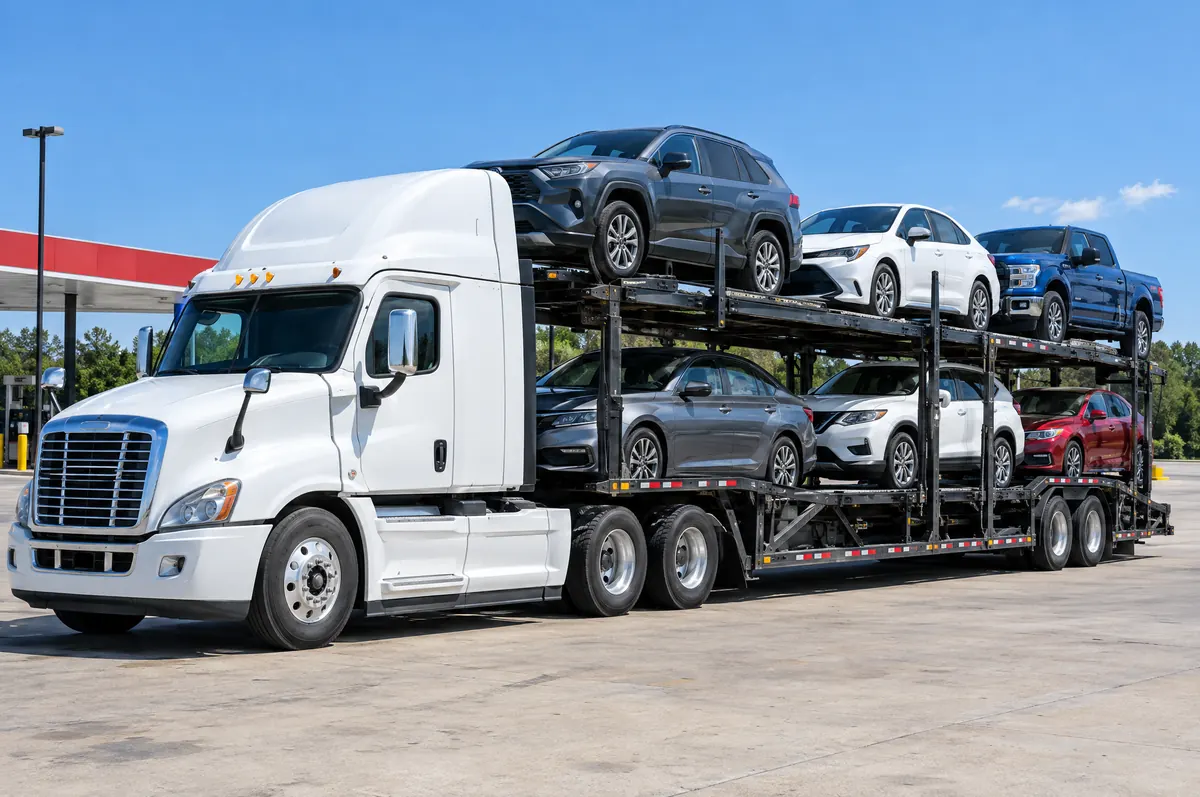
A carrier loads it onto a truck with seven to ten other cars and delivers it.


Most people compare the first and third, and forget that the second exists. It's worth a look, because a household move often includes a rental truck that can pull a car anyway.
Trailer or tow dolly?
Rental companies offer two pieces of equipment, and they are not interchangeable.
| Item | Car trailer | Tow dolly |
|---|---|---|
| How the car rides | All four wheels on the trailer | Front wheels up, rear wheels on the road |
| Wear on your car | None: no miles added | The rear tires cover the distance |
| Drivetrain limits | Suits most cars, including all-wheel drive | Usually front-wheel drive only, unless the drivetrain can be disconnected |
| Weight pulled | Heavier: trailer plus car | Lighter |
| Maneuvering | Longer combination, harder to reverse | Shorter, still awkward |
| Loading | Ramps, straps and a walk-around check | Ramps and wheel straps |
How the car rides
- Car trailer
- All four wheels on the trailer
- Tow dolly
- Front wheels up, rear wheels on the road
Wear on your car
- Car trailer
- None: no miles added
- Tow dolly
- The rear tires cover the distance
Drivetrain limits
- Car trailer
- Suits most cars, including all-wheel drive
- Tow dolly
- Usually front-wheel drive only, unless the drivetrain can be disconnected
Weight pulled
- Car trailer
- Heavier: trailer plus car
- Tow dolly
- Lighter
Maneuvering
- Car trailer
- Longer combination, harder to reverse
- Tow dolly
- Shorter, still awkward
Loading
- Car trailer
- Ramps, straps and a walk-around check
- Tow dolly
- Ramps and wheel straps
Before you hitch anything up
- Find your tow ratingIt is in the owner's manual; weight limits are on the label inside the driver's door frame. The rating covers the trailer and the car together.
- Check the hitch and wiringClass of hitch, ball size, lights and, on heavier loads, trailer brakes.
- Ask your insurerConfirm the towed car and the rental equipment are covered, and by which policy.
- Plan the route, not just the distanceMountain grades, tolls, low bridges and city parking all change with a car behind you.
- Practice before the highwayReversing and lane changes with a car in tow take space you don't have at a gas station.
That rate is what the IRS allows per mile for business driving, and it is a fair yardstick for the true cost of your own miles: fuel, tires, servicing and wear. Towing adds to all four, because the engine, brakes and transmission are working harder than usual.
When each option wins
- Tow it: you're already renting a moving truck, the car is light, front-wheel drive and runs, and the trip is a day or two.
- Ship it: the car is the only thing moving, the trip is long, or the car is heavy, lowered, modified, valuable or non-running.
- Drive it: short trip, the car is reliable, and you're happy to add the miles.
One thing towing can't do is remove the driving. If the value of the trip to you is arriving rested, a carrier buys that back, and the car arrives with the same odometer reading it left with.
Frequently asked questions
Is towing a car cheaper than shipping it?
It can be when you're already renting a moving truck, because you're only adding the equipment. Once you count fuel for a heavier load, extra nights on the road, your own time and the wear on the tow vehicle, the gap narrows, and for a single car over a long distance shipping often wins.
Can I tow any car on a dolly?
No. Dollies are generally for front-wheel-drive cars, because the driven wheels stay on the road on a rear-wheel-drive car and can damage the transmission unless the drivetrain is disconnected. Rental companies publish the rules per vehicle and refuse combinations that don't fit.
Where do I find my tow rating?
The owner's manual gives the maximum trailer weight and tongue weight; the certification label inside the driver's door frame gives the vehicle's weight ratings. Add the trailer and the towed car together and compare with the rating before you book.
Do I need a special license to tow a car?
For a private car on a rental trailer, a normal driving license is usually enough, but state rules on trailer brakes, lights, mirrors and speed limits vary. Check the rules for every state on your route, not just your own.
Is the towed car insured?
Ask your insurer in writing. Some policies cover a towed vehicle, some don't, and rental companies sell their own coverage for the equipment. This is the question people skip and regret.
Can I tow a car that doesn't run?
Loading a non-running car onto a trailer needs a winch and help, and a dolly is usually out. This is the case where hiring inoperable transport is worth the money, because the carrier has the winch and the experience.
Sources
Written and reviewed by the Haulwide editorial team. Editorial policy