Table of contents
Quick answer
Decide whether to drive or ship about six weeks out, book shipping two to three weeks before you need the car moved, and prepare it the week before: clean, photographed, mostly empty and about a quarter tank of fuel. After the move, update your insurance and mailing address, then register the car and switch your license within your new state's deadline.
Six weeks before: decide and plan
- Decide whether to drive the car or ship it
- Check your new state's registration and license deadlines
- Tell your lender or leasing company about the move
- Look up whether your new county requires an emissions test
- Get quotes if you plan to ship, and note how prices move with the season
Two to three weeks before: book
- Compare quotes for the same dates, vehicle and transport type
- Verify the company's USDOT or MC number
- Confirm the pickup window, total price, deposit and refund terms in writing
- Choose a pickup spot a large truck can reach
- Arrange who will release and receive the car if you can't be there
If you're also hiring movers
Household movers and car shippers are usually different companies with different trucks and schedules. Some movers can arrange car transport through a partner, but plan the two separately so a delay in one doesn't hold up the other.
- Don't pack household goods in the car unless the car shipper allows it
- Line up the car's delivery with when you'll have a parking space
- Keep important documents, including your title, with you
The week before: prepare the car
- Wash the car so every mark is visible at inspection
- Photograph every side, the roof, wheels, interior and odometer
- Remove personal items, toll tags and parking passes
- Leave about a quarter tank of fuel
- Check tires, battery and fluids, and note any leaks
- Fold in mirrors and remove or secure loose parts
- Set aside one working key for the driver
Pickup day
- Meet the driverBe reachable by phone and on time at the agreed spot.
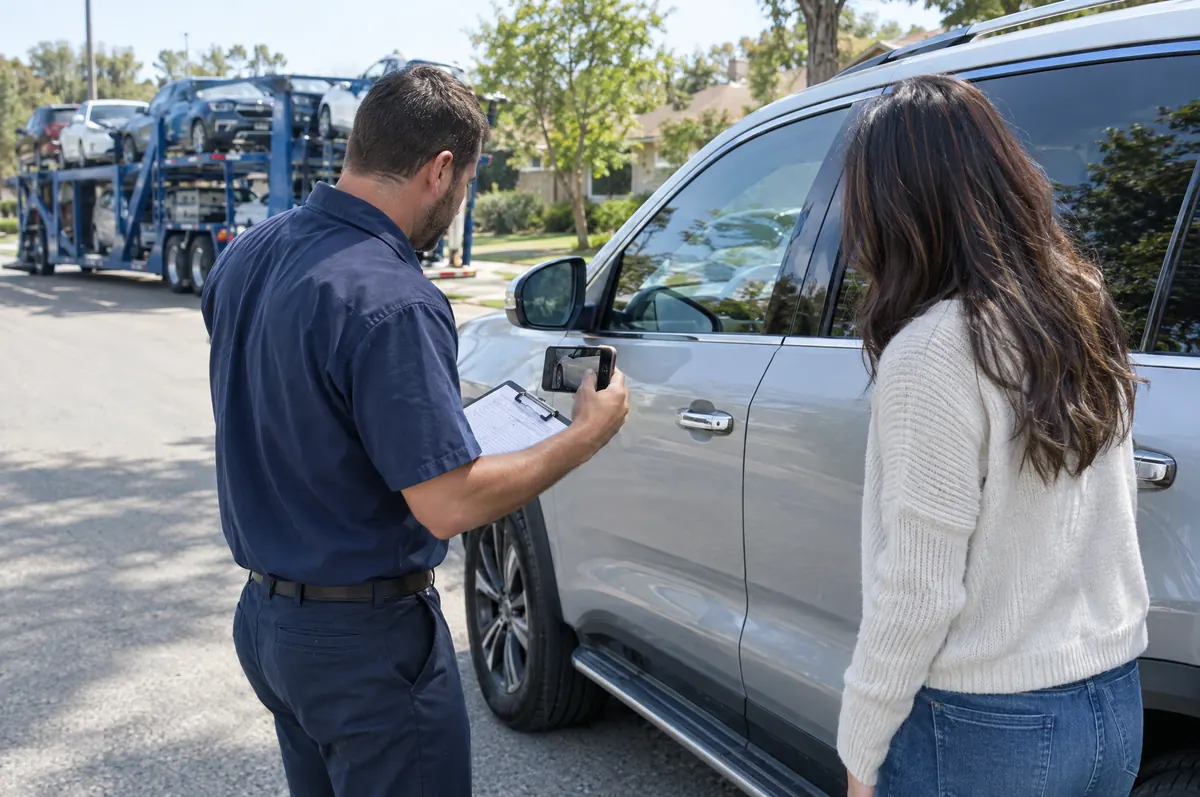
- Inspect togetherCheck the condition report against the car before signing the bill of lading.
- Hand over the keysGive the driver one key and keep the rest.
- Keep your copySave the signed bill of lading and the driver's contact details.
After you arrive
- Inspect the car at delivery and note any new damage before signing
- Update your insurance to your new address and state
- Forward your mail and update your address with your lender
- Book a DMV appointment for registration and your new license
- Get any inspection or emissions test your new state requires
- Cancel the old registration and follow your old state's plate rules
Getting around until the car arrives
Cars often arrive a few days after you do. Plan for that gap so a late truck doesn't disrupt your first week.
- Book a short rental or use rideshares for the first days
- Schedule deliveries and utility appointments for times you can get to
- Ask your employer whether relocation benefits cover a rental car
- Keep the carrier's contact details handy for delivery updates
Moving two or more cars
Many families drive one car with their belongings and ship the other. Shipping several cars on the same truck can also be efficient if they share a pickup and delivery address.
Budgeting for the car part of your move
The car can be one of the larger moving costs, so give it its own line in your budget. Include more than the shipping quote or the fuel for the drive.
| Cost | When it comes up |
|---|---|
| Shipping deposit and balance | At booking or carrier assignment, and at delivery |
| Fuel, hotels and meals | If you drive the car yourself |
| Rental car or rideshares | While you wait for the car to arrive |
| Title, registration and plates | Within your new state's deadline |
| Emissions or safety inspection | Before registration, where required |
| Insurance changes | When you update your address |
Shipping deposit and balance
- When it comes up
- At booking or carrier assignment, and at delivery
Fuel, hotels and meals
- When it comes up
- If you drive the car yourself
Rental car or rideshares
- When it comes up
- While you wait for the car to arrive
Title, registration and plates
- When it comes up
- Within your new state's deadline
Emissions or safety inspection
- When it comes up
- Before registration, where required
Insurance changes
- When it comes up
- When you update your address
Special cases
- Leased or financed car: tell the leasing company or lender before you move
- Car that doesn't run: tell the shipper so it sends a truck with a winch
- Classic or luxury car: consider enclosed transport and book earlier
- Military move: check what your orders cover and book early in PCS season
- Student car: plan around move-in and move-out weekends
Frequently asked questions
When should I book car shipping for a move?
About two to three weeks before you need the car moved, and earlier in summer or on snowbird routes in season.
How far in advance to bookCan my car arrive the same day I do?
It's possible but hard to guarantee, because carriers work with pickup windows. Plan for the car to arrive a few days after you.
Can my moving company ship my car?
Some movers arrange car transport through partners. Ask who the actual carrier is and verify it, just as you would if you booked directly.
Can I pack boxes in my car when I move?
Most carriers allow little or nothing, and carrier insurance usually doesn't cover personal items. Ask before you pack.
Items in your carDo I need to change my car insurance when I move?
Yes. Tell your insurer your new address, because rates and required coverage depend on where the car is kept.
How soon must I register my car after moving?
It depends on the state, commonly 10 to 30 days after you become a resident.
Register in a new stateHow many keys should I give the driver?
One. Keep the others, and make sure the key you hand over opens the doors and trunk.
How much does it cost to ship a car when moving?
It depends mainly on distance, vehicle and season. Use the cost calculator for a published range, then compare quotes for your dates.
Cost calculator
Sources
Written and reviewed by the Haulwide editorial team. Editorial policy