Table of contents
Quick answer
For a car moving by truck within the United States you generally need photo ID, the keys, and the names and phone numbers of whoever will hand the car over and receive it. Federal rules require the carrier's receipt to name the shipper and receiver, the origin and destination and the vehicle; proof of ownership is not on that list, which is why a title is generally not required to have a car transported. You do need the title to register the car at the other end, and ocean routes and exports are stricter. Companies can ask for more, so ask yours before pickup day.
The short list
Almost every domestic car shipment is handled with what is on this list. Everything else in this guide is either a document the driver brings or a special case.
- Photo ID for whoever hands the car over, and for whoever receives it. Drivers don't always ask, but they are entitled to.
- The keys: one set that opens the car, starts it and releases any steering or wheel lock.
- Your booking confirmation, with the order number and the agreed price.
- The names and mobile numbers of the people at both ends, given to the company in advance.
- A way to pay the balance in the form the company told you the driver accepts.
That is it for a normal move. The carrier supplies the document that matters most, the bill of lading, and it is filled in with you standing beside the car.
Why a title is generally not required
This is the question people ask most, and the answer is the one the rest of this site gives: shipping a car and proving you own it are two different problems. Transport is a contract to move an object. Ownership is a question for a state motor vehicle agency, and it arrives when you register the car, not when you load it.
Proof of ownership is not on that list. It is why cars bought at auction, inherited cars, and cars whose titles sit in a lender's filing cabinet get shipped every day without anyone producing a title.
The bill of lading and the inspection report
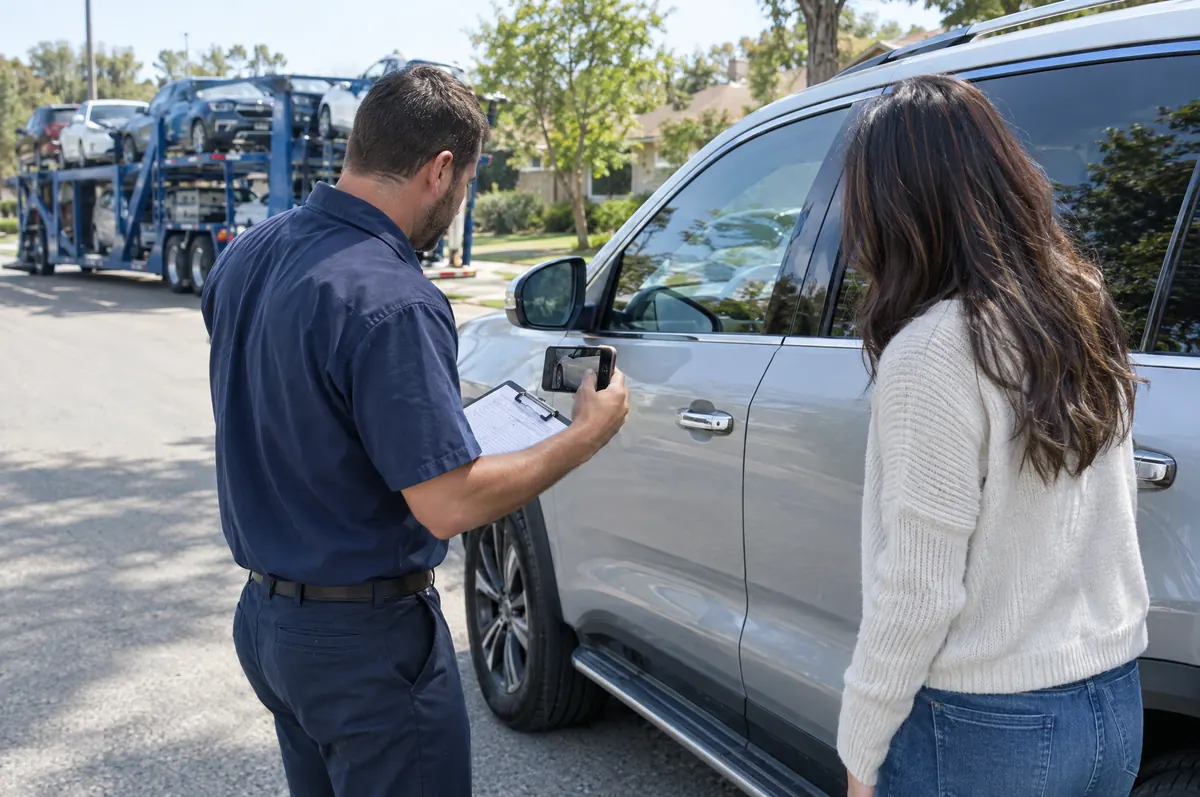
The bill of lading is the carrier's receipt for your car, the record of its condition, and the source of your evidence if anything goes wrong. Car carriers attach an inspection report to it: a diagram where the driver marks every existing scratch, dent and chip, with the odometer reading. Many drivers now do all of it on a tablet, with photos attached.
- Check your own details firstNames, phone numbers, both addresses, and the year, make, model, color and VIN.
- Walk around with the driverIn good light, on a clean car. A scratch hidden by dirt at pickup is an argument at delivery.
- Make the diagram match the carEvery existing mark recorded, and nothing recorded that isn't there.
- Never sign it blankA blank form signed at pickup is worth nothing to you and a great deal to anyone who wants to argue later.
- Keep your copyPaper or digital, before the truck leaves. You sign the same document again at delivery.
Keys count as paperwork
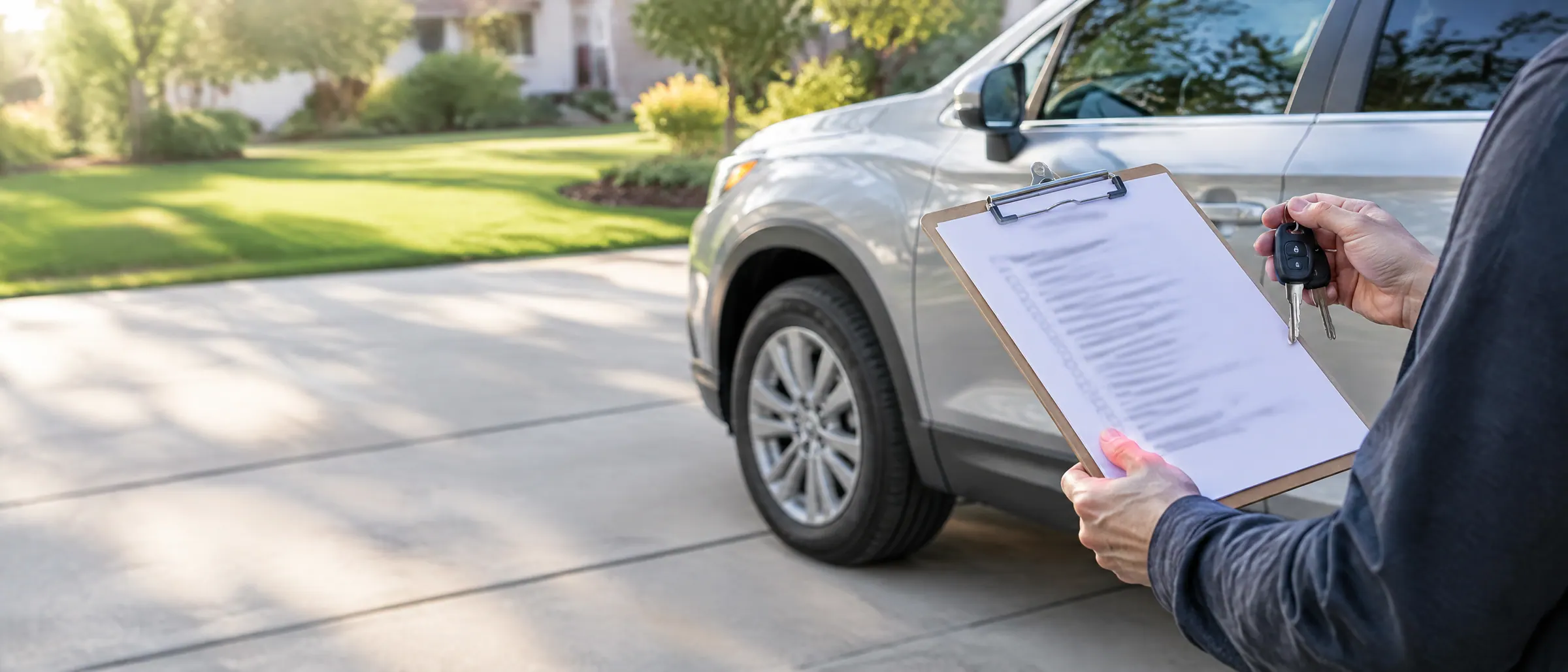
The driver has to move the car a few feet, steer it and stop it, twice. That is the whole requirement, and it is why keys matter more than documents on the day.
- Send one working set and keep the spare, so a key lost in transit doesn't lock you out of your own car.
- Photograph what you hand over, including the fob.
- Say so at booking if there is no key. A car that can't be driven on goes as an inoperable vehicle, on a truck with a winch, booked that way from the start.
- Mention wheel locks, kill switches and aftermarket alarms, and pass on the key or the code.
Who may release and receive the car
It does not have to be the owner at either end. Any adult you name can hand the car to the driver or accept it at delivery. What the paperwork records is who did it, which is why the company wants the name before the day rather than on it.
- Give the company your stand-in's full name and phone number as soon as you know it, and tell them to have photo ID ready.
- Send them the pickup photos and a copy of the bill of lading, so they can tell old damage from new.
- Make sure they understand that signing at delivery closes the condition report. A signature given to be polite is the evidence you lose.
- If a dealership or a building front desk is receiving the car, ask them first. Some won't sign for anything they didn't order.
When the paperwork changes
The short list covers a car you own outright, moving by road, inside the United States. These five situations add to it, and the last changes it completely.
| Situation | What to have ready |
|---|---|
| Bought online or out of state | The bill of sale and the seller's odometer disclosure. If the car must be driven at either end, ask the state about a temporary or in-transit permit. |
| Leased or financed | The lender holds the title. Ask for written permission to move the car, and expect some shipping companies to want to see it. |
| Inherited | Estate paperwork proving the chain of ownership. Most states have a short affidavit route for a vehicle rather than full probate, and the form differs by state. |
| Going to Hawaii, Alaska or Puerto Rico | Ocean carriers are stricter: expect to produce the original title and registration, plus a lienholder letter for a financed car. |
| Leaving the country | Export is a customs process, not a shipping one. The title is filed ahead of time, and a financed or leased vehicle needs the lienholder's written consent. |
Bought online or out of state
- What to have ready
- The bill of sale and the seller's odometer disclosure. If the car must be driven at either end, ask the state about a temporary or in-transit permit.
Leased or financed
- What to have ready
- The lender holds the title. Ask for written permission to move the car, and expect some shipping companies to want to see it.
Inherited
- What to have ready
- Estate paperwork proving the chain of ownership. Most states have a short affidavit route for a vehicle rather than full probate, and the form differs by state.
Going to Hawaii, Alaska or Puerto Rico
- What to have ready
- Ocean carriers are stricter: expect to produce the original title and registration, plus a lienholder letter for a financed car.
Leaving the country
- What to have ready
- Export is a customs process, not a shipping one. The title is filed ahead of time, and a financed or leased vehicle needs the lienholder's written consent.
Sources: NHTSA: Odometer disclosure, New York DMV: In-transit permits, California DMV, estate valued at $150,000 or less, Matson: Prepare your car, US Customs and Border Protection, Exporting a motor vehicle
The paperwork you need after it arrives
Delivery is where the documents you didn't need for the trip start to matter. Registering the car in a new state is a separate job with its own list, and the deadline belongs to the state you moved to, not to the carrier.
- Keep the signed delivery copy of the bill of lading. It shows the arrival date, which matters for a registration deadline and for any claim.
- Make sure your own insurance is active before you drive the car. The carrier's cover ended when you signed for it.
- Have the title, or know where it is. Registration is the step that needs it.
- Keep the invoice and proof of payment, which is what an employer or relocation team will ask for.
Frequently asked questions
Do I need the title to ship a car?
Generally no, for a car moving by truck inside the United States. Federal rules say the carrier's receipt must name the shipper and receiver, the origin and destination and the vehicle; proof of ownership isn't part of it. You do need the title to register the car at the other end, and ocean carriers and exports do ask for it.
No title or keys?Will the driver ask for ID?
Sometimes. The driver needs an adult at each end who has the keys and can sign, and asking to see photo ID is a reasonable check. Have it ready, and tell anyone standing in for you to do the same.
What if my car is financed and the lender holds the title?
Ask the lender for written permission to move the vehicle, especially across state lines or offshore. Many lenders have a standard letter for it, and ocean carriers and customs both require the lienholder's consent.
Leased or financed carsDoes the car need to be registered or insured to be shipped?
Usually not. A car on a truck isn't being driven on public roads, so expired tags rarely stop a pickup, and the carrier's insurance applies while the car is in its care. Any stretch the car has to be driven is the exception.
Unregistered or uninsured carsWhat documents do I get from the carrier?
The bill of lading, signed at pickup and again at delivery, with the inspection report showing the car's condition and the odometer reading. Keep your copy of both signatures, along with the invoice and payment receipt.
The bill of ladingWhen should I send the company any documents it asks for?
As soon as you book. Anything a company needs, such as a lienholder letter or a bill of sale, is quick to produce with a week's notice and a problem on the morning the truck arrives.
Sources
- 49 CFR 373.101
- FMCSA: Protect your move
- 49 U.S.C. 14706(e)
- NHTSA: Odometer disclosure
- New York DMV: In-transit permits
- California DMV, estate valued at $150,000 or less
- Matson: Prepare your car
- US Customs and Border Protection, Exporting a motor vehicle
- USAGov: State motor vehicle services
Written and reviewed by the Haulwide editorial team. Editorial policy