Table of contents
Quick answer
Almost none. On a normal door-to-door move your car is driven only the few feet it takes to go up the ramp and into position on the trailer, then the few feet it takes to come off at the other end. If it doesn't run, it is winched on and off and isn't driven at all. The truck covers the distance, not the car. The odometer reading is written on the inspection report at pickup, so photograph the dashboard yourself at both ends and you will have your own proof.
What actually happens to your car
A car carrier is a moving parking lot. The driver brings your car up the ramps under its own power, lines it up on a deck beside the other cars, and straps the wheels down. From that point the car is cargo. It sits still for the whole journey while the truck does the driving. At delivery the straps come off and the car is driven back down the ramps to the curb.
- Pickup: the engine runs for the short drive from the curb up the ramp and into its spot.
- In transit: the car is strapped down and switched off. The odometer does not move.
- Delivery: the engine runs again for the short drive down the ramp to where you are standing.
That is the whole of it on a door-to-door move. A car that doesn't run is winched onto the deck instead, so it isn't driven at all, and the reading you handed over is the reading you get back.
Why people ask
Nobody worries about a handful of feet for its own sake. The question comes up because the odometer is tied to money in three common situations.
A lease with a mileage limit
Leases set an allowance and charge for miles beyond it. If you are already close to the limit, you want the car moved, not driven.
A sale, trade-in or appraisal
Mileage is one of the first things a buyer or appraiser looks at, and the reading has to match the paperwork you sign.
A warranty or service interval
Coverage and service schedules are written in miles. A move shouldn't bring the next threshold any closer.


That last point is why sellers in particular care about the reading at both ends. If the car is being shipped to a buyer, the mileage you disclose on the paperwork should still be the mileage on the dashboard when the buyer opens the door.
How to prove the reading didn't move
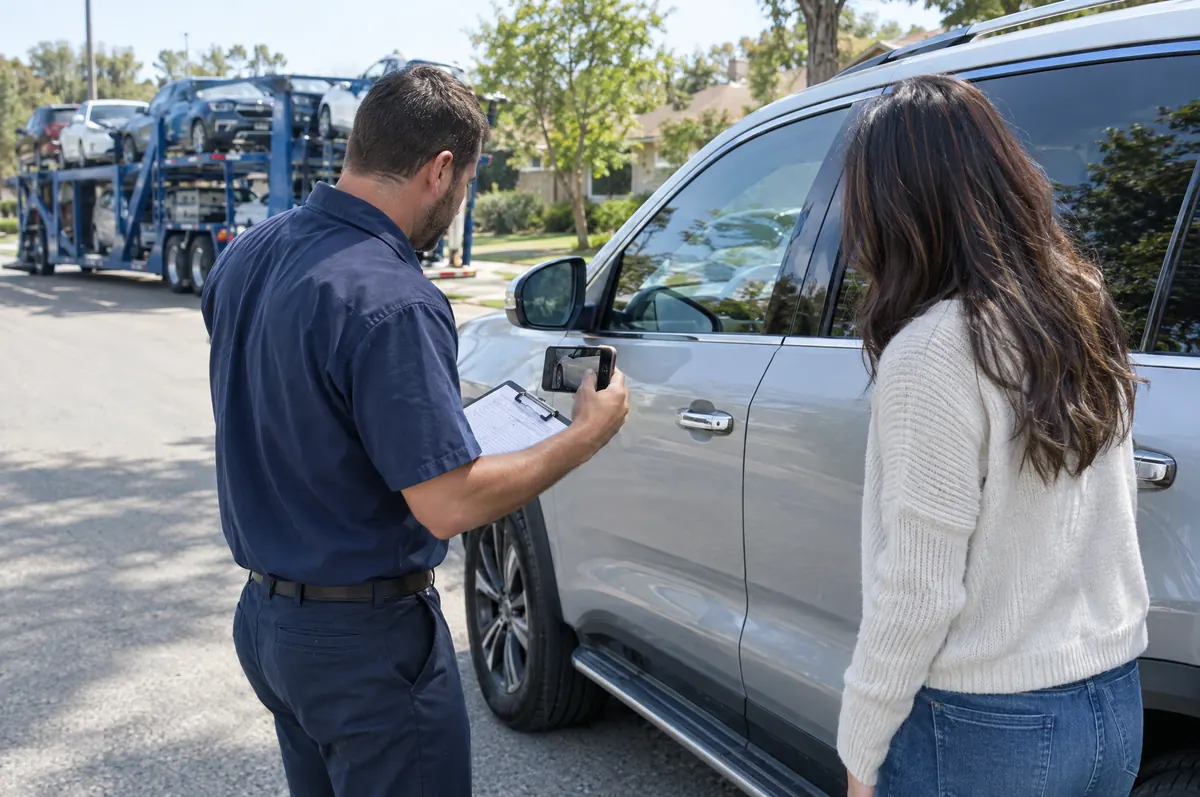
You don't have to take anyone's word for this. The odometer is recorded twice by two different people: by you, in a photo, and by the driver, on the inspection report.
- Photograph the dashboard at pickupIgnition on so the display lights up, close enough that the digits are readable, before the driver loads the car. Include any warning lights in the same shot.
- Check what the driver wrote downThe inspection report and bill of lading record the odometer reading along with the car's condition. Read it and make sure it matches your photo before you sign.
- Keep your copyPaper or emailed, keep the signed pickup copy where you can find it. It is the document that fixes the reading at the start of the trip.
- Photograph the dashboard again at deliverySame shot, before you sign anything. Do it while the driver is still there, not after they have gone.
- Compare the twoTwo photos and one signed document are enough to settle any question about mileage, for a lease return, a buyer or an appraiser.
What would add real miles
There are several ways to get a car across the country, and they do not all leave the odometer alone. The difference is simply whether someone sits in your car and drives it.
| How the car travels | Who moves it | What the odometer does |
|---|---|---|
| On a car carrier | A carrier loads it onto a truck | Barely moves: a few feet on and off at each end |
| Winched on as an inoperable vehicle | A carrier with a winch | Doesn't move: the car is never driven |
| Driveaway | A hired driver drives your car | Climbs by the length of the trip |
| You drive it | You | Climbs by the length of the trip, plus detours |
| Towed behind a rental truck | You tow it on a trailer or dolly | The car isn't driven, though a dolly leaves the rear wheels turning on the road |
On a car carrier
- Who moves it
- A carrier loads it onto a truck
- What the odometer does
- Barely moves: a few feet on and off at each end
Winched on as an inoperable vehicle
- Who moves it
- A carrier with a winch
- What the odometer does
- Doesn't move: the car is never driven
Driveaway
- Who moves it
- A hired driver drives your car
- What the odometer does
- Climbs by the length of the trip
You drive it
- Who moves it
- You
- What the odometer does
- Climbs by the length of the trip, plus detours
Towed behind a rental truck
- Who moves it
- You tow it on a trailer or dolly
- What the odometer does
- The car isn't driven, though a dolly leaves the rear wheels turning on the road
Driveaway is the one people mix up with shipping, because it is also something you hire a company to do. It suits vehicles that don't fit a car carrier, and it can be quicker. But your car does the travelling, which means fuel, tires, wear and a longer reading at the far end. If the mileage is the thing you are protecting, driveaway is the option to rule out first.
If the reading is higher than you expected
Start with your own record rather than an argument. Compare your delivery photo with your pickup photo and with the reading written on the bill of lading. Quite often the gap is smaller than it felt, or the number you remembered was never written down.
- Someone drove the car after you last looked at it: a family member, a dealer, a detailer, or you, on the way to meet the driver.
- The car was moved at a terminal, or loaded onto a second truck part-way through a long route.
- The pickup reading on the paperwork was rounded or misread, which is why your own photo matters.
- The car was repositioned on the deck so another vehicle could be loaded or unloaded ahead of it.
Then ask the company you booked with which carrier actually had the car, and for the record of the shipment. If a broker arranged the move, federal rules give every party to the transaction the right to see that record.
Related reading
Frequently asked questions
Does shipping a car add miles to the odometer?
Only the few feet the car is driven on and off the truck at each end. The truck covers the distance of the trip, not your car, so the reading at delivery should be almost exactly what it was at pickup.
How many miles does car shipping add?
Nobody publishes a figure, because it depends on how far the car is driven up the ramp and into position. It is a matter of feet at each end, not miles. Photograph your odometer at pickup and at delivery and you will have the exact number for your own move.
Will shipping my car push me over my lease mileage limit?
Shipping on a car carrier is the option least likely to. The car is driven only on and off the truck. Hiring a driver to drive it instead, which is called driveaway, does add the full distance to the odometer.
Shipping a leased or financed carIs the mileage recorded anywhere during shipping?
Yes. The driver records the odometer reading on the inspection report and bill of lading at pickup, alongside the car's condition. You inspect and sign again at delivery, so there is a written record at both ends.
The bill of lading, explainedWhat about a car that doesn't run?
It is winched onto the trailer rather than driven, so it isn't driven at all. The odometer reading should be identical at both ends.
Shipping a car that doesn't runThe reading at delivery is higher than I expected. What should I do?
Compare your own pickup photo with the reading written on the bill of lading, then note the difference on the delivery copy before you sign and photograph it. Ask the company which carrier had the car; if a broker arranged the move, you have the right to review its record of the shipment.
Sources
- Car carrier trailer
- NHTSA: Odometer disclosure
- FMCSA: Protect your move
- 49 CFR 390.5
- 49 CFR 371.3
- FMCSA: How to file a complaint
Written and reviewed by the Haulwide editorial team. Editorial policy